
Secure Data Center Relocation for IT & Server Infrastructure
Data center relocation services in Canada for the secure physical movement of servers, telecom hardware, and critical IT infrastructure. Every relocation is planned around site access, equipment protection, staged handling, and operational continuity across enterprise environments in major Canadian commercial hubs.






Specialized IT & Data Center Moving Services


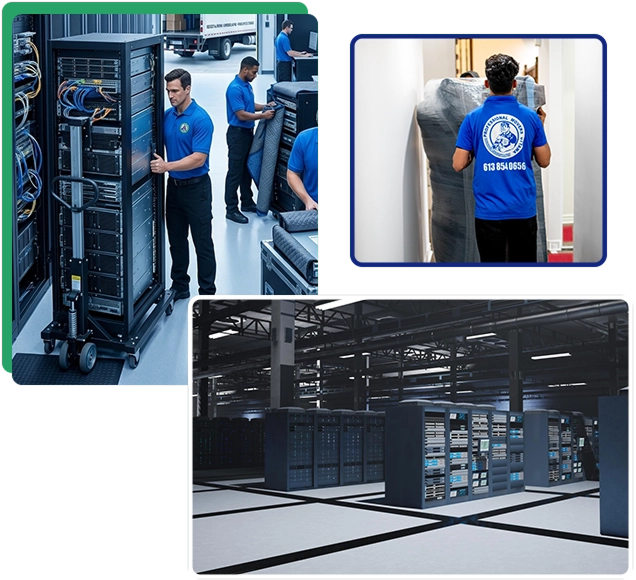
How We Handle IT & Data Center Equipment
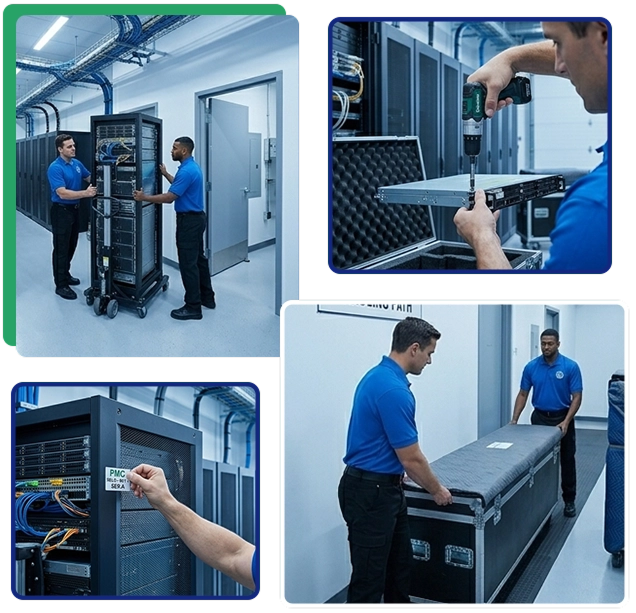
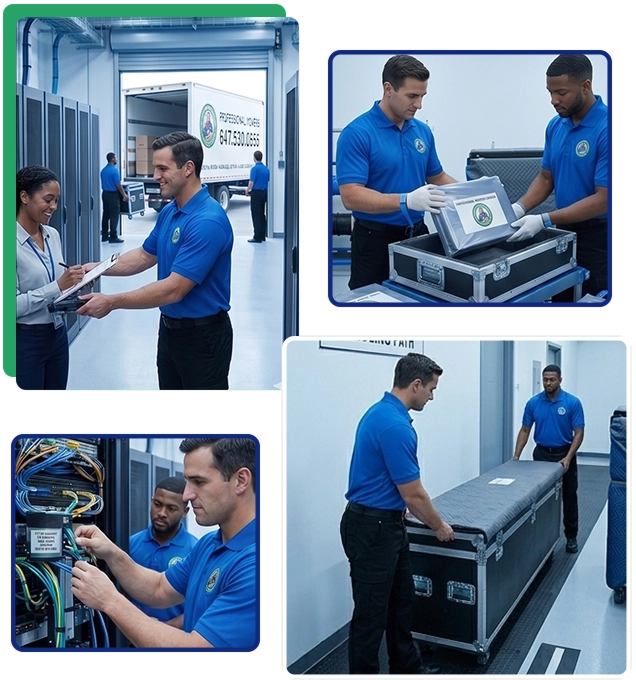
Precision matters in IT logistics because even a small oversight can affect operational performance. Every relocation starts with a site survey to review access routes, loading conditions, rack count, and staging requirements before any equipment is moved. Servers and racks are inventoried, tagged, secured, and anti-static wrapped before handling begins. Equipment is then grouped by rack or system type and staged in sequence to reduce handling overlap during loading. Heavy systems are moved using proper lifting techniques, stable load placement, and planned routing.
From pickup through delivery, each step is coordinated to protect equipment, maintain the chain of custody, and support operational continuity.
Certified, Insured & Trusted for Server & Data Center Moves
- WSIB insured
- BBB accredited
- CAM member
- MovingWaldo certified
Data Center Relocation Process: From Site Survey to Handoff
| Stage | What Happens | Why It Matters |
|---|---|---|
| Site Survey | Review of access routes, loading conditions, dock/elevator limits, and rack count. | Prevents day-of delays and unexpected bottlenecks. |
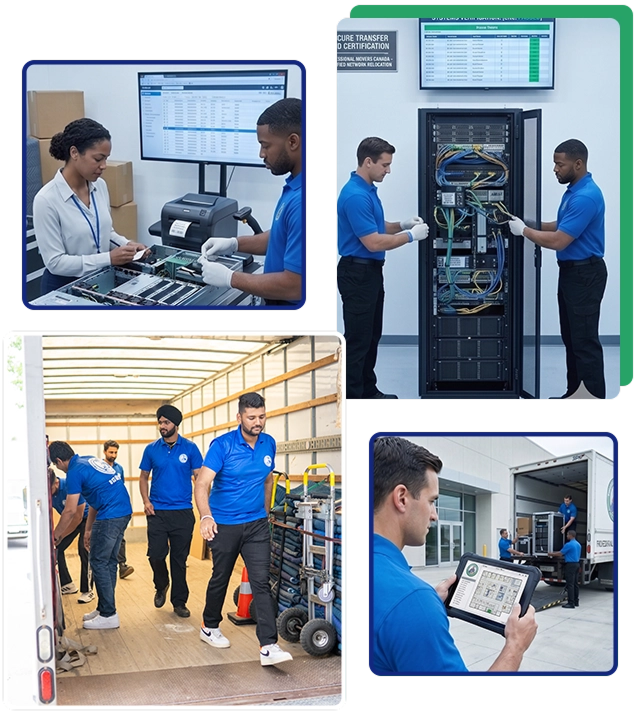
| Inventory and Tagging | Creation of a master asset list with corresponding labels and rack mapping. | Supports a strict chain of custody and accountability. |
| Equipment Prep | Application of ESD-safe wrapping, stabilization, and logical grouping. | Reduces handling risk and protects sensitive components. |
| Staged Loading | The load sequence is executed based on rack/system type and weight distribution. | Prevents handling overlap and ensures transport stability. |
| Secure Transport | Specialized placement using vibration control and high-limit cargo protection. | Protects sensitive hardware from transit-related stress. |
| Delivery Placement | Equipment is delivered and grouped according to the destination rack/system plan. | Helps your internal IT teams re-rack and re-cable faster. |
| Handoff | Final inventory check and confirmation of placement at the new facility. | Confirms accountability and ensures the project meets scope. |
Core Operational Standards
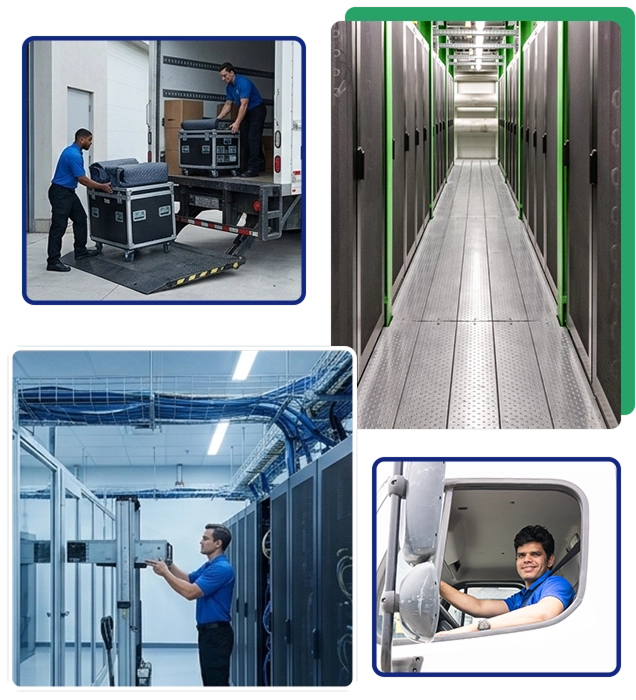
Steady Equipment Handling: Sensitive systems, including servers, rack units, and telecom hardware, require disciplined handling, anti-static (ESD) protection, and precise weight distribution to mitigate physical stress. This protocol protects hardware integrity through stable vehicle placement, secure loading, and vibration-conscious transport methods, maintaining stability at every stage of movement in active enterprise environments.
Staged Loading Sequence: Loading equipment in a planned, balanced sequence, guided by pre-move inventory audits and rack-mapping, minimizes movement risk and ensures an orderly flow of transport. This approach is a standard for data center and IT infrastructure moves, keeping critical gear stable and properly positioned based on weight-priority staging throughout the transit.
Access & Route Coordination: Efficiency depends on navigating site-specific hurdles, such as dock scheduling and freight elevator availability. Whether managing winter weather contingency plans or coordinating access through Vancouver’s West End, we plan ahead. Our coordination identifies and bypasses logistical bottlenecks, like the narrow freight access in Toronto’s Financial District, that typically stall complex enterprise relocations.
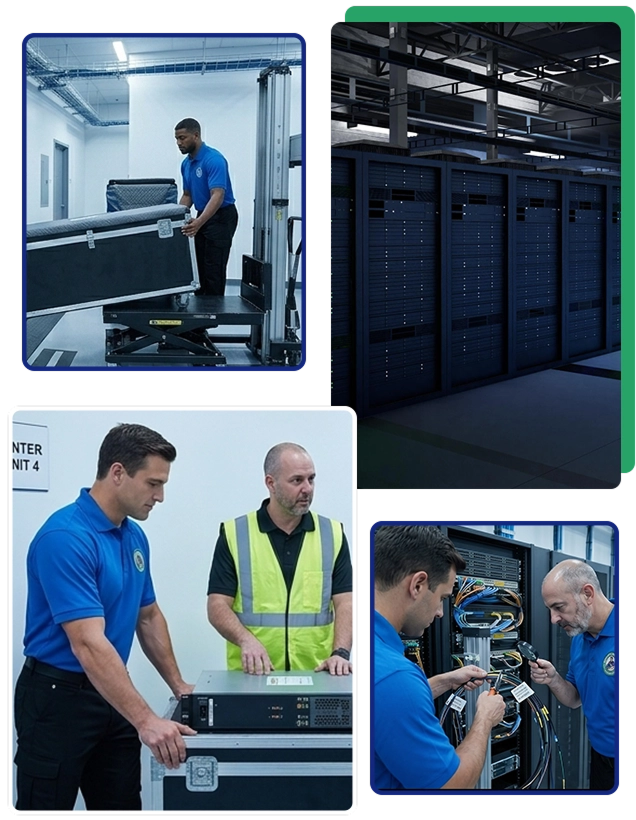
High-Sensitivity Environment Awareness: We execute relocations with a focus on tightly integrated IT systems and production environments, often working within strict maintenance windows. Careful execution depends on working within controlled facility access, maintenance windows, and security procedures so sensitive equipment is moved only when the site, crew, and client IT team are ready.
Serving Major Cities Across Canada
Projects in these markets often involve different access conditions, from downtown freight-elevator windows to industrial park dock scheduling and colocation facility security requirements. As network infrastructure relocation experts, we serve major Canadian business hubs, including:
- Toronto
- Vancouver
- Calgary
- Montreal
- Ottawa
- Mississauga
- Brampton
- Edmonton
- Surrey
- Burnaby
Complete Data Center Move Execution & Operational Control

Certified and Insured Handling Standards
Specialized procedures, including anti-static (ESD) wrapping and shock-mitigation protocols, are designed specifically for the physical relocation of servers, telecom systems, and infrastructure across Canada. Coverage includes high-limit cargo valuation to protect the financial and operational integrity of your hardware assets.

Access and Infrastructure Coordination Expertise
Logistics management includes navigating complex facility layouts, from restricted loading docks to the cage-access and security-escort protocols typical of Tier III/IV data centers. We handle the technical coordination of freight elevator windows and dock scheduling to ensure a smooth transition within your facility.

Transparent Project-Based Pricing
Estimates are generated based on a detailed asset inventory, rack count, and the specific complexity of your site’s physical environment. This provides a clear cost structure tied to the physical scope of the move, ensuring no hidden operational charges on the final invoice.

Secure Storage for IT Timelines
Climate-controlled, high-security storage options bridge the gap during phased migrations, maintenance windows, or when a new facility is not yet ready for immediate rack-and-stack installation.
What IT & Data Center Clients Say About Their Move

"Relocating our server room was a high-stakes project with tight downtime windows. The inventory process helped us keep track of every rack-mounted unit, and everything arrived at the new site intact. The move was much more controlled than we expected, which kept our transition smooth."
T. Henderson (IT Infrastructure Manager, Toronto Financial District)

"Our building had really limited dock access and very strict timing for the freight elevators. The crew adjusted their loading approach on the fly to fit our facility's rules without stalling the move. They clearly knew how to work around strict dock and elevator timing, even with the site limitations."
S. Miller (Operations Lead, Mississauga Commercial Hub)
"Moving multiple network racks and telecom systems required careful handling and proper anti-static protection. The team kept everything organized using our rack-mapping plan and staged the transport sequence perfectly. Everything arrived exactly where it needed to be, so there was no confusion when our team started re-cabling."
K. Singh (Systems Administrator, Vancouver West End)
Who We Serve – Data Center & IT Infrastructure Relocations
IT Managers & Infrastructure Teams: We support teams coordinating everything from server migrations and hardware refreshes to full system transitions. These projects prioritize Rack-and-Stack integrity, de-racking protocols, and strict SLA-driven execution timelines to ensure core systems remain stable throughout the move.
Enterprise & Corporate Operations Teams: For leadership teams managing facility relocations, the focus is on protecting business-critical IT infrastructure. We prioritize operational continuity, ensuring that the move minimizes disruption to daily workflows through staged loading and maintaining controlled handling of sensitive assets within strict maintenance windows.
Data Center & Facility Coordinators: This service is tailored for those overseeing structured environments in colocation facilities or private data centers. We manage the synchronized movement of servers and racks within Hot/Cold Aisle setups, respecting cage-access security and the time-sensitive nature of access-controlled environments.
Telecom & Network Infrastructure Teams: We provide precision logistics for specialized teams managing structured cabling and interconnected network hardware. These moves require a high level of coordination, including cable labelling and inventory auditing, and controlled transport across Canadian commercial hubs to keep systems linked and functional.
Service Scope & Operational Boundary
| Included in Service | Not Included (Client/Integrator Task) |
|---|---|
| Physical de-racking and transport once systems are powered down, disconnected, and cleared by the client’s IT team | Software, OS, or IP configuration |
| Protective anti-static (ESD) wrapping | Network activation or testing |
| Asset tagging and inventory audit | Application or database validation |
| Staged loading and secure transit | Power-down and shutdown sequences |
| Destination placement per rack plan | Live environment cutover engineering |
What Your IT Team Should Prepare Before Move Day
A successful data center relocation depends on shared coordination. Please have the following verified by your infrastructure lead:
Current Asset Inventory: A detailed list of all servers, rack units, and telecom hardware.
Rack Elevation & Destination Map: A clear plan for exactly where each unit will be placed.
Cable Labeling & Documentation: Ensure all interconnects are labeled to speed up re-cabling.
Shutdown & Maintenance Schedule: Clear timelines for when systems will be powered down.
Backup Verification: Confirmation that all critical data has been backed up prior to handling.
Access & Security Permissions: Verified cage-access and security escort requirements.
Facility Logistics: Confirmed bookings for loading docks and freight elevators at both sites.
Internal IT Contact On-Site: A designated technical point of contact to oversee placement.
Destination Readiness: Confirm rack space, power availability, access permissions, and placement plan at the receiving facility.
Moving Tips and Planning Guides

October 9. 2026
2-Bedroom Moving Cost in Calgary: What Your Estimate May Miss
A two-bedroom move in Calgary may fall around $550–$1,250 in labour as a planning range. Two or three movers and…
Read More
October 5. 2026
How Much Does It Cost to Move a 1-Bedroom Apartment in Calgary?
Moving a 1-bedroom apartment in Calgary can look straightforward until you account for the things that actually take time. Carrying…
Read More
October 5. 2026
Calgary Hourly Moving Rates: What You’ll Actually Pay
Hourly rates can range from $145 to $320 per hour, depending on crew size. As a general guide, two movers…
Read More
September 24. 2026
How Much Do Movers Cost in Calgary? A 2026 Pricing Guide
Movers in Calgary typically charge around $145–$320 per hour depending on crew size, with total moving costs ranging from approximately…
Read More
September 16. 2026
How Much Do Movers Cost in Toronto in 2026? Hourly Rates, Home Size & Examples
At Professional Movers Toronto, our regular-day rate for two movers is currently $129–$139 per hour, while peak-day pricing starts at…
Read More
September 3. 2026
Burnaby Strata Moving Rules: Approval, Fees and Elevator Booking
Moving into a Burnaby condo can seem simple at first. You choose a date, book the movers and arrange the…
Read More
August 26. 2026
7 Secrets to Find The Best Toronto Mover
Finding movers is not hard. But it takes time to pick the best and most reliable mover in a busy…
Read More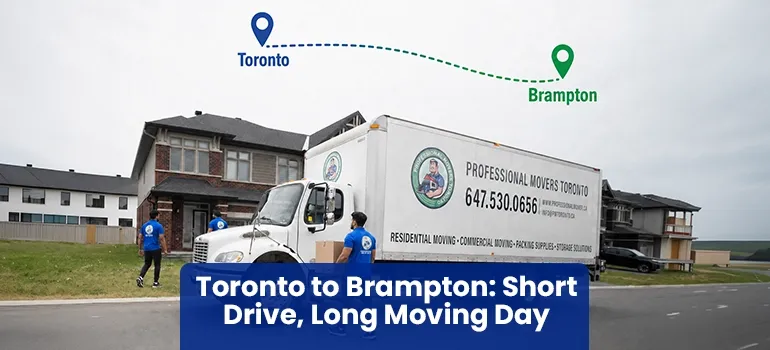
August 24. 2026
Moving From Toronto to Brampton: Why a 40-Minute Drive Can Still Become a Multi-Hour Move!
A Toronto-to-Brampton move can look straightforward on a map. Your route planner may show a drive of around 40 minutes.…
Read More
August 21. 2026
Moving Schools in Canada: Mid-Year and Summer Planning for Families
A family move can change more than the address on a school record. A new home may also mean a…
Read More
August 18. 2026
Moving From Toronto to Vancouver: How an Extra $2,000 Can Add Up for Families
A Toronto-to-Vancouver move covers roughly 4,300 kilometres by road, and for families, the moving quote is only one part of…
Read MoreData Center Relocation FAQs: Costs, Timelines & IT Infrastructure Execution Explained
Costs are determined by asset inventory, server density, and rack count, as well as site-specific access restrictions, such as freight elevator dimensions or narrow hallways. Total pricing reflects project complexity, including requirements for phased migrations, specialized telecom handling, and the transport distance between Canadian commercial hubs.
Protection starts with Rack-and-Stack integrity protocols, including anti-static (ESD) wrapping, cable management documentation, and custom stabilization. We stage equipment in a specific sequence and use vibration-dampening suspension vehicles to protect sensitive internal components during transit.
Downtime is reduced through synchronized loading sequences, pre-move site surveys, and SLA-driven timelines. By prioritizing critical production environments and using staged handling within maintenance windows, the transition between facilities is managed to keep enterprise operations stable.
Timelines range from a single evening for small server rooms to several days for enterprise-scale environments. Duration depends on equipment volume and logistical constraints, such as dock scheduling and the availability of facility security escorts. A controlled, phased execution is always used to maintain system stability.
Relocation covers the full physical stack: servers, rack-mounted units, telecom hardware, network switches, and routers. Each asset is handled based on rack-mapping, weight distribution, and system dependencies to ensure safe physical transit.
Preparation focuses on a comprehensive IT inventory, asset tagging, and backup verification. Coordinating shutdown schedules and ensuring that all cage-access permissions are cleared at both the origin and destination helps streamline the staging process and prevent “day-of” delays.
Success depends on navigating restricted entry points, tight “cutover” windows, and complex site layouts. These variables require high-sensitivity awareness and chain-of-custody documentation to bypass bottlenecks in dense commercial environments.
No, these services focus on the specialized physical logistics, handling, staging, and transport. While the physical move is managed with technical discipline and post-move placement verification, the internal IT teams or system integrators handle the software configuration and network activation.