
Get Your Free Estimate Now
"*" indicates required fields






Rising housing costs in Ontario, especially in the GTA, have led many people to explore alternatives in other provinces.
If you’re planning to move from Ontario to Surrey, BC, you’re likely trying to figure out a few important things before making the decision.
How much will it actually cost to live there?
Which neighbourhoods are safe and suit your lifestyle?
Can you arrange housing before you arrive?
What should you prepare so everything goes smoothly after the move?
These are important questions because moving across provinces is a major financial and personal step. It is not just about changing cities, it means adjusting to a different housing market, new expenses, and a new day-to-day routine.
This guide is based on real Ontario to BC relocations and practical insights from cross-country moving experience. It brings together the key details in one place, from cost of living and neighbourhood insights to a clear step-by-step moving checklist, so you can plan with confidence and avoid unnecessary stress.
Whether you are moving for family, work, or a better lifestyle, the goal is simple. To help you understand what to expect and make informed decisions as you plan your move to Surrey in 2026.
PHASE 1: SHOULD YOU EVEN MOVE? (Decision Stage)
Is Moving to Surrey BC from Ontario Worth It in 2026? (Honest Pros and Cons)
What People Love About Surrey
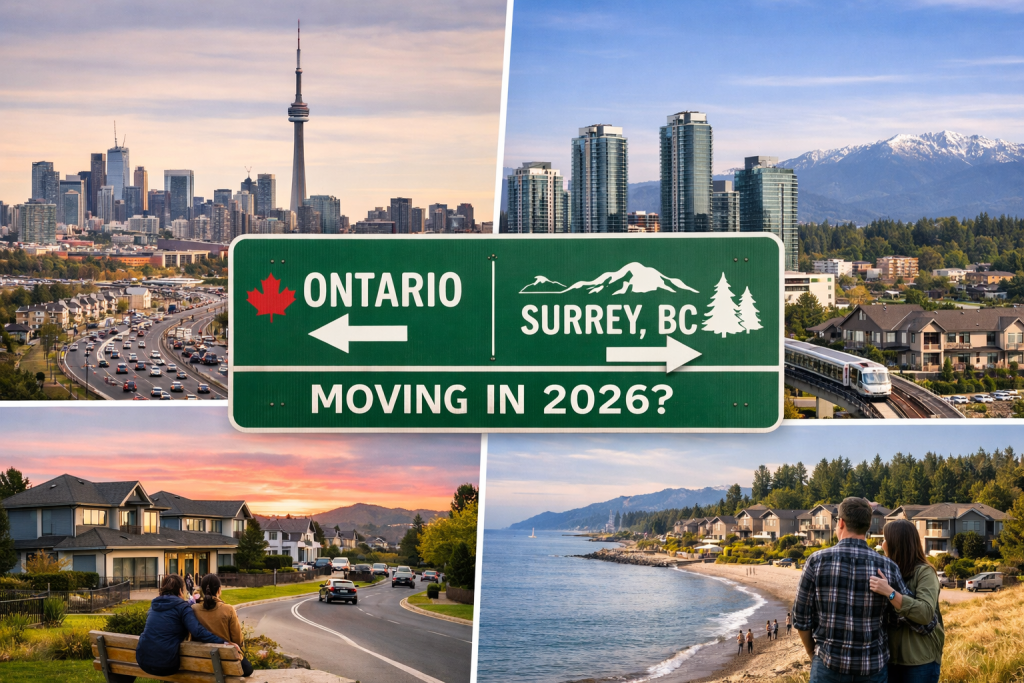
Housing can feel more manageable than Toronto-area living. Surrey is one of the least expensive Metro Vancouver cities by rent per square foot at $2.49/sq. ft. in January 2026, while Toronto apartment rents averaged $2,551 in October 2025. For many Ontario movers, that means a better chance of getting more space for the monthly budget.
A strong South Asian community helps people settle faster. Surrey’s official demographic profile shows a large South Asian population citywide, and some neighbourhoods are even more established, for example, the Scott Road area profile reports 64% South Asian residents. That matters if community, language, food, and cultural familiarity are part of your move decision.
Daily life feels greener and less boxed in. The City of Surrey says it has more than 800 parks, and Park People reports Surrey is above average for parkland per person among large Canadian cities. That is a real lifestyle win for families, walkers, and anyone wanting easier access to nature.
The Downsides Nobody Talks About
The rain can wear on you. Surrey swap means trading Ontario’s back-breaking snow shovelling for “The Big Squeeze”-consistent West Coast rain. You can ditch the heavy -30°C parkas, but you’ll definitely need to invest in a high-quality waterproof shell (think Gore-Tex) to stay dry during the long, grey, damp months. It’s a trade-off: no more ice scraping, but you’ll likely rely more on waterproof clothing during the long wet season (October to April)
Some areas are still car-reliant. Surrey has bus and SkyTrain access, but city transit planning and public feedback both point to the need for stronger service in many areas.
ICBC can surprise Ontario drivers. B.C. uses a public system (ICBC). It’s different from Ontario’s private market, and your rates will depend on your driving history.
Bottom line: You are probably not making a mistake if you want more space, stronger community ties, and a family-friendly lifestyle, but your neighbourhood choice and transport plan will make or break the experience.
How Much Does It Cost to Live in Surrey Compared to Ontario in 2026?
If you’re planning this move, the real question is simple: Will your monthly life feel heavier or easier on your budget? Here’s a clear, practical breakdown based on current 2025–2026 data.
Monthly Cost Comparison (Singles and Families)
| Expense | Surrey (BC) | GTA (Ontario) |
|---|---|---|
| 1-bed rent | $1,800 – $2,300 | $2,100 – $2,600 |
| 2-bed rent | $2,200 – $2,800 | $2,700 – $3,400 |
| Groceries (1 person) | $350 – $500 | $300 – $450 |
| Utilities | $150 – $250 | $180 – $300 |
| Car insurance | $150 – $300+ | $120 – $250 |
The 2026 Grocery Gap: Price Snapshot
| Item | Ontario (Avg) | Surrey, BC (Avg) | Practical Note |
|---|---|---|---|
| Milk (4L) | $5.90 – $6.50 | $6.20 – $7.10 | BC dairy board pricing is generally higher. |
| Eggs (Dozen) | $4.50 | $5.25 | Save money at local farm stands in Cloverdale. |
| Gasoline (L) | $1.55 | $1.85 | BC’s carbon tax makes fuel significantly pricier. |
| PST/HST | 13% (HST) | 5% GST + 7% PST | Most basic groceries are not subject to GST or PST. |
Pro-Tip: While singles might save on rent flexibility in Surrey, families often find that the “rent savings” are partially offset by higher gas prices and grocery costs. The real financial win in Surrey isn’t just a lower bill, it’s getting a larger living space (like a basement suite or townhouse) for the same price you’d pay for a small GTA apartment.
Who Should (and Should NOT) Move to Surrey BC
Choosing Surrey is less about “good or bad” and more about whether it fits how you actually live day to day. Here’s a clear way to decide.
Who Does Surrey Work Well For
Families needing space: Specifically, buyers want a full house or a large suite with a backyard. Otherwise, they feel cramped in a standard GTA condo.
Hybrid or remote workers: Because commuting is rare, remote employees leverage the lower rent-per-square-foot. Furthermore, they easily avoid the daily drive to Downtown Vancouver.
Culture seekers: Most importantly, residents want easy access to specific grocery stores and festivals. Thus, they choose a community where they feel properly represented.
Who Might Struggle in Surrey
Downtown energy lovers: First, this area lacks late-night walkability. Therefore, Surrey will feel far too quiet.
Transit-dependent commuters: Second, the SkyTrain is a great system. However, living in Cloverdale without a car feels highly isolating.
Small-town budget shoppers: Third, Surrey is cheaper than Toronto. Still, it is a major city. As a result, daily living costs remain high.
PHASE 2: PLANNING YOUR MOVE (Preparation Stage)
Full Moving Checklist: Ontario to Surrey BC (Step-by-Step Timeline)
Families moving from Ontario to British Columbia should confirm school placement and course-transfer requirements before fixing the first school date. Our guide to changing schools during an interprovincial move explains the academic handoff. This is where most people go wrong, they either start too late or miss small steps that create stress later. Follow this timeline to keep things under control.
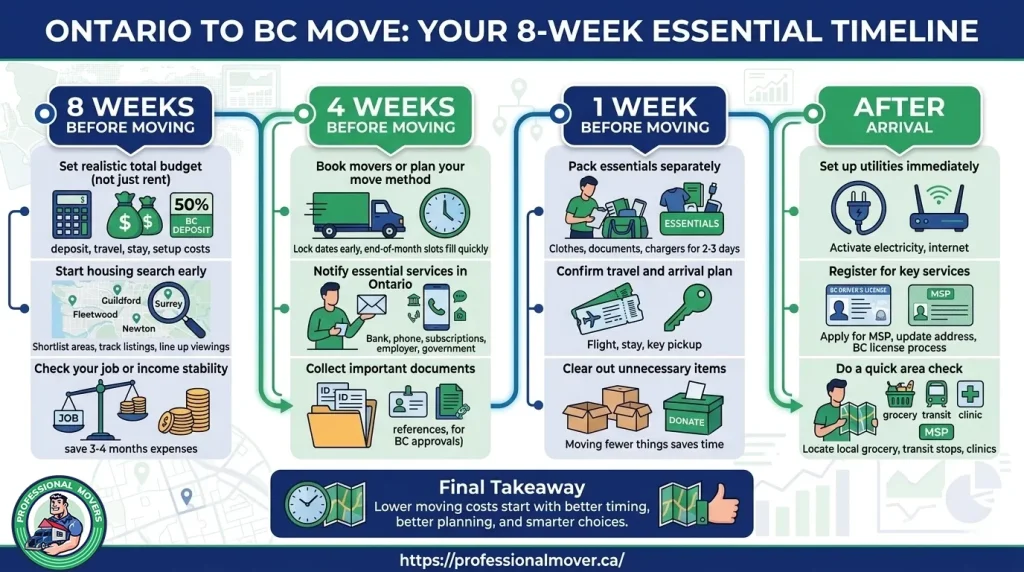
Not sure where to start? Get a personalized Ontario-to-Surrey moving plan based on your timeline, budget, and inventory.
Cost of Moving from Ontario to Surrey BC (Typical 2026 Cost Estimates)
Most people underestimate this part. The cost is not just about distance, it depends on how much you’re moving and how much effort you want to handle yourself.
Moving from Ontario to Surrey isn’t just a long drive, it’s a cross-country move that needs proper planning and reliable handling.
At Professional Movers Canada, we regularly manage Ontario-to-BC moves, so we understand the route, timing, and challenges involved.
Our full-service team takes care of everything:
- Careful packing for long-distance transport
- Secure loading to prevent shifting during transit
- Coordinated delivery timelines across provinces
- Safe unloading and placement at your new home
We’ve handled multiple Ontario to BC relocations covering over 4,000 km routes, including full household moves, partial shipments, and time-sensitive deliveries.
Most clients moving full households across provinces choose this option to avoid delays, damage risks, and long-distance driving fatigue.
You focus on settling in, while we handle the move from start to finish.
2. DIY Truck (Lowest cost, most effort)
You rent a truck, drive it across provinces, and handle loading/unloading yourself.
Works only if you’re moving light. Long-distance driving (3,000+ km) adds fuel, hotels, and fatigue.
3. Moving Containers (Balanced option)
A container is dropped at your place, you load it, and it’s shipped to Surrey.
Best middle-ground for cost vs convenience. You control packing, but avoid long driving.
Price Estimates (2026 Reality)
DIY Truck: $2,000 – $4,000 (fuel, rental, stay included)
Moving Containers: $3,000 – $6,000
Full-Service Movers: $5,000 – $8,000+
Want an exact price for your move? Get a fixed, no-surprise quote based on your inventory and moving date.
Practical Insight
The biggest cost factor is how much stuff you move. Many people reduce costs by selling bulky furniture in Ontario and buying it again in Surrey. This can easily save $1,000–$2,000+ and make the move simpler.
Real Transit Time and Route Conditions (Ontario to Surrey)
Moving from Ontario to Surrey isn’t just about distance, it’s a cross-country haul that requires proper planning.
- The total distance from Toronto to Surrey is roughly 4,000+ km
- In real-world conditions, deliveries typically take 7 to 14 days
- Timing depends on load size, route conditions, and whether the shipment is shared or dedicated
One of the biggest factors most people don’t account for is the final stretch through British Columbia.
The Coquihalla Highway is known for steep grades and unpredictable weather. During winter months, trucks often require tire chains, and delays due to snow or road closures are common.
What this means for you:
If you’re moving in winter, build in a few extra days and keep essentials with you. Delivery timelines can shift, and that’s a normal part of long-distance moving in Canada.
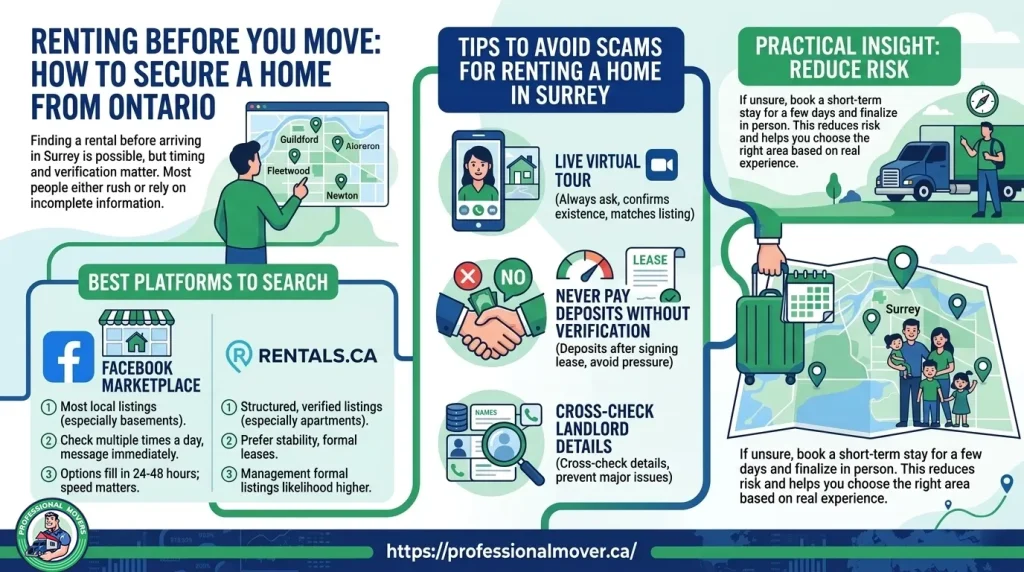
PHASE 3: WHERE TO LIVE (High-Intent Decision Stage)
Best Neighbourhoods in Surrey BC for Newcomers (2026 Guide)
Surrey is spread out, and each area offers a very different living experience. Your choice should depend on your budget, daily commute, and the kind of lifestyle you want after moving.
1. Newton – Budget-Friendly and Diverse
- Average Rent: $1,700 – $2,400 (1–2 bedroom, more basement options)
- Best For: Budget-conscious renters, newcomers
Newton is Surrey’s largest town centre and serves as a major transit and commercial hub. For Ontario movers, it offers the most diverse range of rental housing, from older low-rise apartments to a high density of secondary suites.
While it is the most affordable entry point, the quality of the living experience varies block by block significantly. Focus on the residential pockets rather than the main commercial strips to find the best value.
Pro-Tip for Newcomers: Stick to East Newton or Sullivan Heights for a quieter, more polished family environment. Living experiences vary block by block, so visiting the area before finalizing a lease is recommended.
2. Fleetwood – Family-Friendly and Growing
- Average Rent: $2,200 – $3,000
- Best For: Families, long-term renters
Fleetwood offers a quieter, residential feel with established secondary suites and detached homes. It’s a strategic choice for those wanting a backyard without South Surrey prices. With the upcoming SkyTrain extension, property values and rental demand are peaking. It’s perfect if you want a stable community near parks like Tynehead, offering a smoother transition from suburban Ontario life.
3. Guildford – Balanced Lifestyle
- Average Rent: $2,000 – $2,800
- Best For: Working professionals, newcomers
Guildford is one of the most convenient areas, with shopping centres, transit access, and proximity to highways. It works well if you need a mix of accessibility and affordability without moving too far from city activity.
4. South Surrey – Premium Living
- Average Rent: $2,500 – $3,500+
- Best For: Families with higher budgets
South Surrey is cleaner, quieter, and more upscale. It offers a better overall living environment but comes at a higher cost, and most daily activities require a car.
5. Cloverdale – Family-Friendly
- Average Rent: $2,200 – $3,000
- Best For: Families, quieter lifestyle
Cloverdale feels less crowded and more relaxed. It suits people who prefer space and a slower pace, but commuting to other parts of Surrey or Vancouver may take longer.
Generally Quieter Residential Areas in Surrey BC (What You Need to Know in 2026)
Safety in Surrey is not the same everywhere. The city overall is livable, but your experience depends heavily on the specific neighbourhood and even the street you choose.

General Safety Overview
Surrey has both busy urban zones and quiet residential areas. Areas closer to major transit hubs and commercial zones tend to have more activity, while outer residential neighbourhoods are generally calmer. Most safety concerns are localized, not city-wide.
Commonly Preferred Residential Areas
- South Surrey (Morgan Creek, Grandview Heights)
Known for quiet streets, newer housing, and low incident levels. Preferred by families.
- Fleetwood
Consistently considered stable with good schools and residential planning.
- Cloverdale
Slower-paced, less dense, and more community-oriented.
Tips for Choosing Safe Housing
- Visit or check the exact street, not just the area name
- Look for well-lit streets, maintained homes, and active surroundings
- Check proximity to schools, parks, and residential zones
- Avoid rushing into cheaper deals without location checks
PHASE 4: TRANSPORT and DAILY LIFE (Adjustment Stage)
Do You Need a Car in Surrey BC? Transportation Explained
This is one of the most important decisions before moving. Your daily convenience in Surrey depends heavily on where you live and how you commute.
Public Transit Options
SkyTrain (Expo Line)
The fastest and most reliable option connecting Surrey to Vancouver. Stations like King George, Surrey Central, and Gateway are key hubs. Living near these can remove the need for a car.
TransLink Buses
A wide network covering most areas, often connecting neighbourhoods to SkyTrain stations.
Reality: Works well for regular routes but can be slower for multi-stop travel.
RapidBus and Future BRT
Faster bus services with fewer stops. Future Bus Rapid Transit (BRT) expansion will improve connectivity, especially along major corridors like King George Boulevard.
Walking and Cycling
Practical only near central areas. Some stations support bike storage, but overall, the city is spread out.
When is a car necessary?
You can live without a car if you stay near SkyTrain-connected areas (Surrey Central, King George, Gateway). These locations support daily commuting and basic errands.
However, areas like South Surrey, Cloverdale, and parts of Fleetwood are more spread out. In these places, relying only on transit can increase travel time significantly, especially for work, groceries, and school runs.
The ICBC Transition: Essential Guide for Ontario Movers
In British Columbia, car insurance works differently from Ontario. It is managed by a crown corporation called ICBC. You won’t be “shopping around” for basic insurance; everyone gets their base coverage from the same place.
The “Document Trap”: What to do BEFORE you leave Ontario
Your Ontario driving record is your biggest asset. To get the best rates in Surrey, you must prove your safe driving history.
Request these two documents before you head to the airport:
- Driver’s Abstract (most important): Get this from your current Ontario insurance company.
- Driver’s Abstract: A certified copy from ServiceOntario showing your licensing history.
The 90-Day Rule
Once you arrive in Surrey, you have 90 days to switch your Ontario license to a B.C. driver’s license. Most Class G holders can exchange their license easily without a new road test.
PHASE 5: SETTING UP LIFE (Post-Move Stage)
Important Documents and Registrations After Moving to BC
Getting your paperwork done early avoids delays in daily life.
Driver’s License Change
You must switch to a BC license within 90 days. Book early, as appointment slots can fill up quickly.
Health Insurance (MSP)
Apply for BC’s Medical Services Plan (MSP) as soon as you arrive. Coverage may not start immediately, so plan for a short gap if needed.
Address Updates
Update your address with banks, your employer, and government services. Doing this early prevents missed documents and billing issues.
Healthcare in Surrey BC: What Ontario Residents Must Know
Healthcare access is one of the first practical challenges after moving, especially in the first 1–2 months.

- MSP Waiting Period
MSP coverage usually starts after the remainder of your arrival month plus two full months, which can create a gap of up to about 3 months. Many people don’t realize this and arrive without backup coverage. Short-term private insurance for the first month is a safer option.
- Walk-in Clinics
Walk-ins are the default for most newcomers. In busy areas, same-day appointments fill up early, many clinics open booking slots in the morning, so timing matters.
- Finding a Family Doctor
It can take months. Most people rely on clinics long-term or register on multiple waitlists instead of waiting for one.
Jobs and Salary Expectations in Surrey BC (2026)
Your income in Surrey depends less on the city and more on whether you’re willing to work locally or commute to Vancouver.
- Key Industries
Surrey is Western Canada’s primary logistics and trucking hub. Logistics and transportation continue to be strong sectors in the region. Healthcare and construction also offer steady local work, though corporate roles often pay more across the bridge in Vancouver.
- Average Salaries (Reality Check)
Many entry-level roles in Surrey begin at approximately $18 per hour. This covers basic living, but it can feel tight for families, especially with rent. Higher-paying roles (tech, corporate, specialized healthcare) are limited locally.
- Commuting to Vancouver
This is where income improves. Many people living in Surrey work in Vancouver for better pay, especially near SkyTrain lines. The trade-off is longer commute vs higher income, and most people adjust based on their priorities.
PHASE 6: FINAL DOUBTS (Conversion Stage)
FAQs About Moving to Surrey BC from Ontario
Which Ontario driver’s license class matches B.C.?
If you have a full Ontario Class G license, it exchanges directly for a B.C. license. Class 5. If you have a G2, you will likely receive a B.C. Class 7 (Novice) license and may have to complete the graduated licensing program.
Do I need to pay PST on my vehicle when I move from Ontario?
Generally, if you have owned your vehicle for more than 30 days before moving and are a returning resident or new resident, you may qualify for a settler’s effects tax exemption. Check the current ICBC/PST guidelines to confirm your eligibility.
How do I find a family doctor in Surrey?
The most efficient way in 2026 is to register with the Health Connect Registry. While waiting for a permanent placement, most newcomers use Urgent and Primary Care Centres (UPCCs) or walk-in clinics near Surrey Central and Fleetwood.
Is it easy to find vegetarian food in Surrey?
Absolutely. Thanks to the large South Asian community, Surrey (especially the Newton and Payal Business Centre areas) has some of the highest concentrations of vegetarian restaurants and grocery stores in Canada.
What is the “rainy season” really like in Surrey?
Unlike Ontario’s intense thunderstorms, Surrey’s rain is often a persistent, light drizzle. Locals call it “The Big Grey.” It may not stop for days, so a high-quality waterproof jacket is more important here than a heavy winter parka.
Final Verdict: Should You Move to Surrey BC in 2026?
If you are looking for a city that will magically cut your Ontario expenses in half, Surrey isn’t the answer. The real value of moving here isn’t just about the dollars, it’s about the trade-off.
Choose Surrey if you are tired of the GTA’s “concrete jungle” feel and want to trade snow-shovelling for year-round greenery, community ties, and a home where your kids actually have room to grow. It’s a move for those prioritizing lifestyle over speed.
Stay in Ontario if your career or social life depends on the specific hustle of the Golden Horseshoe. Surrey offers a “slow-burn” suburban comfort that works perfectly if you’re ready to settle down, but might feel like a step back if you’re still chasing the high-intensity city vibe.
Still Planning Your Move: Get clear answers, realistic timelines, and a plan that actually works. Talk to Professional Movers Canada before you finalize anything.

More Moving Articles
Testimonials

Love and Harsharan were Amazing. They showed up when they said, got right to work and didn't go over the time allotted. They were gentle with everything and very well mannered. 100% recommend. Thank you guys for making this move easy for us
- Marsha Widmeyer
Contact Us
"*" indicates required fields
Complete Moving and Storage Solutions Across Canada

Contact Our team
Call Professional Movers Canada or fill out our free moving quote form.

Get Your Quote & Plan
Receive an obligation-free estimate and a detailed plan of action for your move.

Experience a Smooth, Professional Move
Leave all the vexing tasks of relocation to our skilled Canada movers.