
Get Your Free Estimate Now
"*" indicates required fields





Moving into a Vancouver condo can feel exciting, but if you’re in a high-rise, there’s more to think about than just packing your boxes. Following Vancouver strata moving rules is key to keeping your move smooth and avoiding unnecessary fines or damage. Every building has its own guidelines, from reserving elevators and booking loading bays to paying strata moving fees BC and coordinating with the concierge.
On top of that, you might need a city of Vancouver moving truck parking permit for larger trucks. In 2026, some of these rules have been updated, making planning ahead more important than ever.
This guide provides a clear look at the steps involved in condo moves, elevator bookings, and high-rise moving logistics, so you can know what to expect and plan accordingly on moving day.
Before diving into the details, it’s important to understand the legal framework behind strata governance. The Strata Property Act of British Columbia establishes the legal framework for strata corporations, while individual buildings adopt their own registered bylaws that regulate move-in procedures, elevator bookings, deposits, and insurance requirements. Always review both provincial legislation and your specific strata bylaws before scheduling your move.
Getting Started: Handling Your Paperwork and Fees (3 Weeks Out)
Before you pack your first box, you must clear the legal hurdles. Recently, many Vancouver strata councils increased their documentation requirements. Therefore, starting three weeks early ensures building management won’t turn you away on moving day.
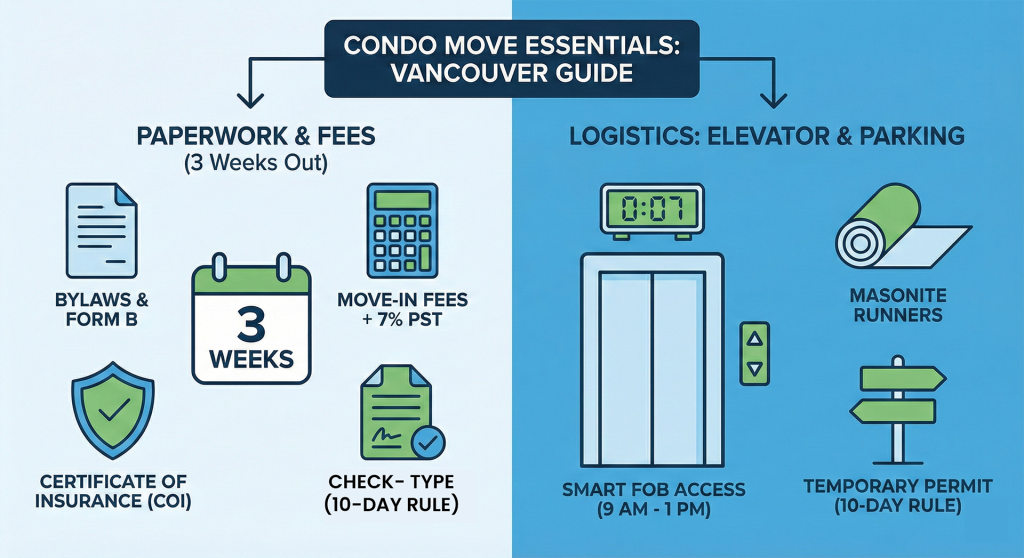
Confirm Your Fees in the Bylaws: Provincial law does not standardize move-in fees and damage deposits. Instead, each strata corporation sets its own rules. To find yours, review the building’s “Form B” Information Certificate. This important document clearly outlines all current strata fees, bylaws, and financial details.
The 2026 “Move-In Tax”: Because of recent provincial tax updates, the government now applies a 7% PST to certain strata management services. Consequently, you should ask your strata manager if this tax affects your specific move. Move-in fees vary wildly across Vancouver buildings, so checking early prevents unexpected budget surprises.
Submit Your Proof of Insurance: Furthermore, almost all Vancouver high-rises now demand a Certificate of Insurance (COI) from your moving company. Your mover must officially name your Strata Corporation as “additionally insured.” Ultimately, this step protects the entire building from potential damage during your relocation.
Logistics: Reserving Your Elevator and Parking
Once the paperwork is filed, you need to claim your physical space. In a busy city like Vancouver, timing is everything, especially as many modern buildings now use digital fob systems and scheduled elevator access.
Securing Your Elevator Time
- Smart-Fob Access: Many modern towers now use fobs programmed for specific “Move Windows” (e.g., 9 AM – 1 PM). If your move runs late, your access to the freight elevator may automatically expire.
- Floor Protection Standards: Some strata corporations require Masonite (hardboard) runners for hallway protection, rather than standard moving blankets. Standard moving rugs or blankets are often rejected by concierges during the pre-move inspection.
Arranging Street Parking
- The 10-Day Permit Rule: The City of Vancouver now recommends applying for Temporary Street Occupancy Permits at least 7 to 10 business days in advance. This ensures city crews have time to post “No Parking” signs so your truck actually has a place to land.
- DIY Movers: Even if you aren’t hiring a pro company, you still need this permit for a rental truck to avoid a heavy city fine.
Understanding New Strata Moving Fees in BC
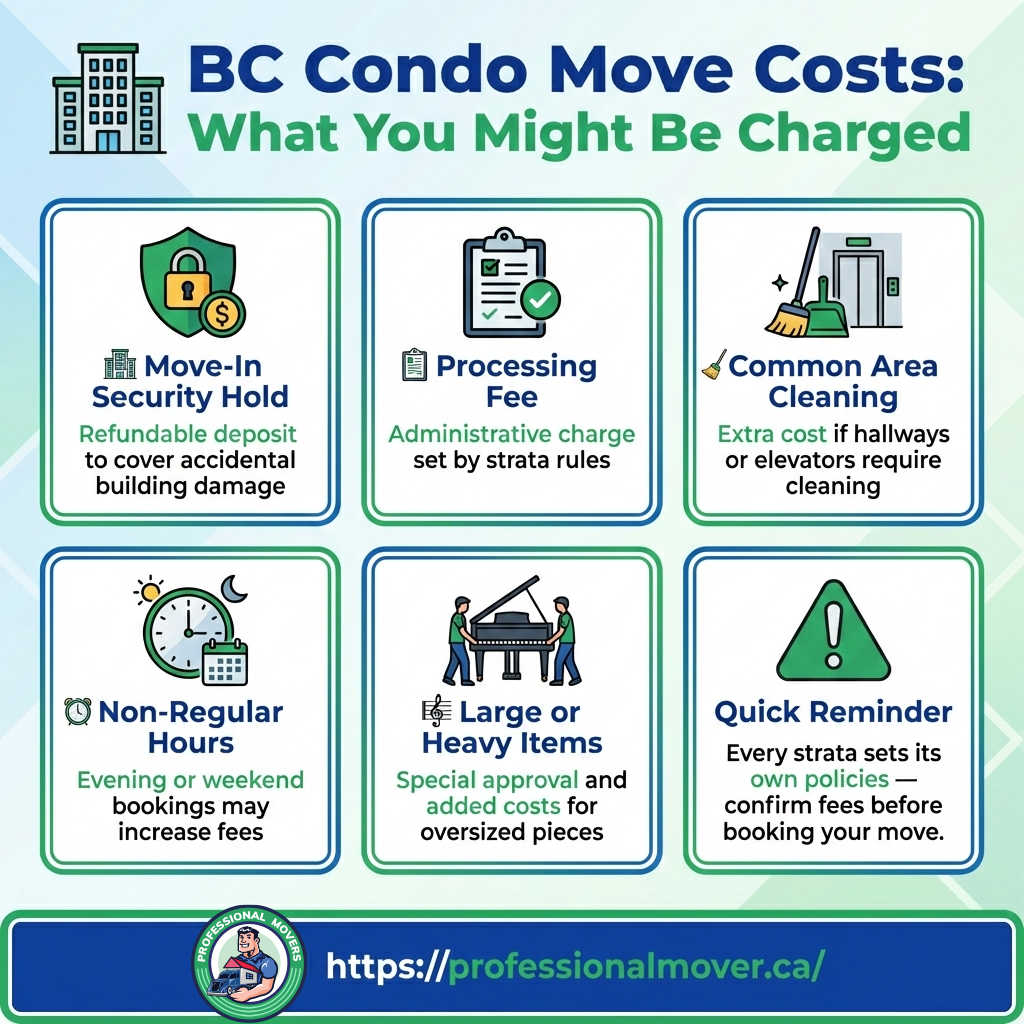
When moving into a Vancouver condo, understanding strata moving fees BC is critical because these costs are mandatory in most buildings and can vary widely. These fees are not standardized under provincial law and are established through each strata corporation’s registered bylaws. Strata councils use these fees to cover potential damage, hallway protection, cleaning, and administrative work associated with a move.
Common Types of Fees:
- Damage Deposits: Many buildings require a refundable damage deposit, which varies by strata corporation and can range widely depending on the building’s policies. This deposit is held to cover any accidental damage to hallways, elevators, or doors during the move. If no damage occurs, it is refunded after a post-move inspection.
- Administrative Fees: Some strata corporations charge a flat administrative fee. Amounts vary depending on the building and may be outlined in the strata’s bylaws.
- Cleaning Charges: Certain high-rises may require a post-move cleaning fee if hallways, elevators, or common areas are expected to be dirtied.
- After-Hours or Weekend Moves: Moving outside regular building hours may result in additional charges. These fees differ by building and are established in each strata corporation’s policies.
- Oversized Items: Items like pianos or large furniture may require additional approval and extra fees to cover additional handling or elevator use.
Knowing the fees ahead of time helps you plan your budget and avoid last-minute costs. Checking your condo’s specific bylaws and confirming amounts with the building manager is essential, as each strata corporation has its own rules and fee schedules.
Loading Bays and Truck Parking in Vancouver
For any condo move in Vancouver, securing loading bay access and truck parking is crucial to keep the move on track. High-rise buildings often have limited loading zones, and failure to reserve them can lead to delays or fines.
- Loading Bay Reservations: Most strata corporations require advance booking of the building’s loading bay. This ensures your movers can load and unload safely without interfering with other residents. Booking periods may vary from 1 to 3 hours, depending on building size and elevator capacity.
- City of Vancouver Moving Truck Permits: Vancouver mandates a parking permit for moving trucks on city streets in designated areas. These permits are time-limited, and the city typically requires 7–10 business days for street occupancy permits to allow for sign-hanging. Oversized trucks may require special arrangements.
- Access Coordination: Some buildings restrict loading bay use to certain hours, often 8 AM–5 PM. Moving outside these times may incur extra fees or require approval.
- Common Restrictions: Vehicles blocking other access points, fire lanes, or emergency exits are strictly prohibited. Strata councils may issue fines for violations in accordance with their registered bylaws.
- Frequent Scenario: In busy downtown Vancouver condos, multiple residents may plan moves on the same day. Booking early avoids scheduling issues and keeps the move on track.
Understanding these rules ensures your move aligns with both building and city regulations, preventing delays and extra costs.
Tips for Moving in a High-Rise Building in Vancouver
High-rise moves in Vancouver involve more than reserving elevators and paying strata fees. Each building has unique layouts, and understanding high-rise moving logistics Vancouver helps avoid hold-ups, damage, and unnecessary stress.
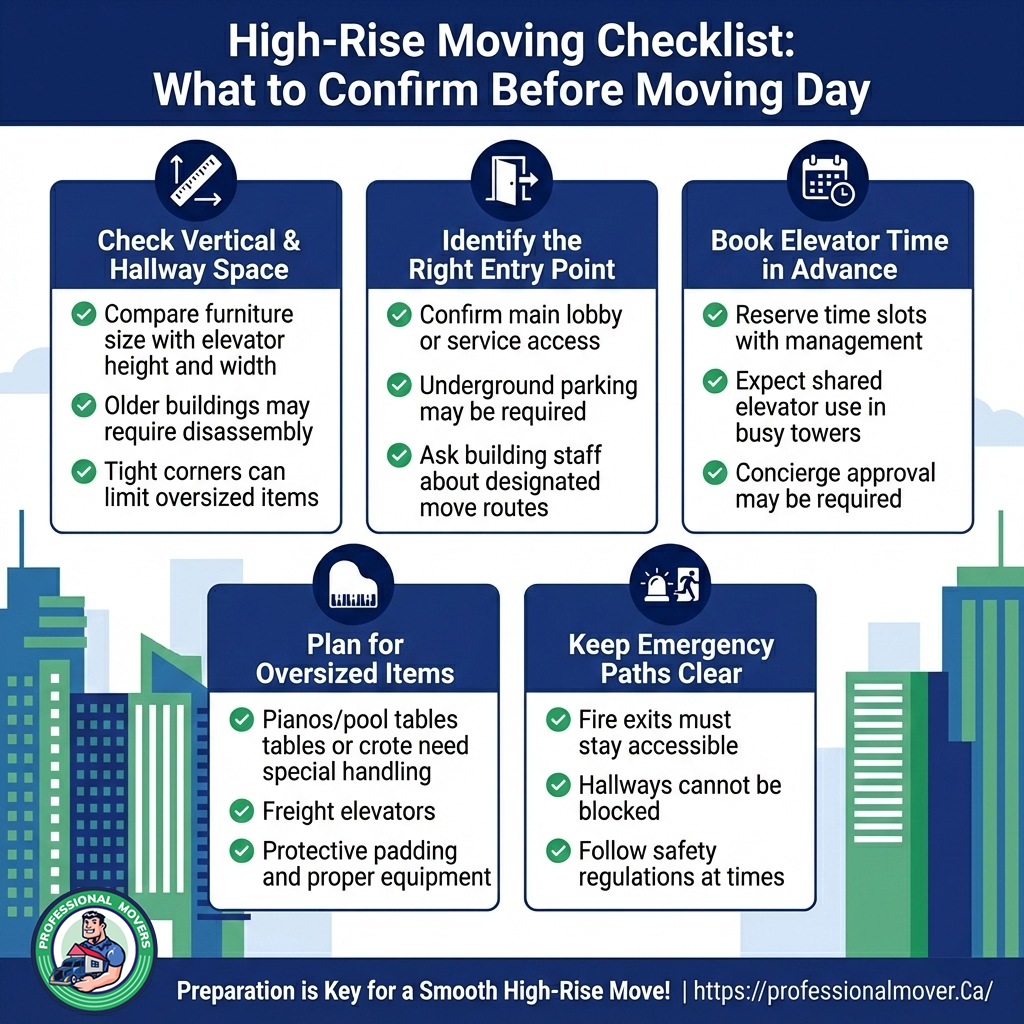
- Elevator and Hallway Dimensions: Measure large furniture and appliances against elevator and hallway sizes. Many older Vancouver buildings have elevators less than 7 feet tall or 5 feet wide, so sectional furniture or disassembly may be necessary.
- Building Entry Points: Some condos have multiple entrances: a main lobby, a service entrance, or underground parking access.
- Scheduling Coordination: Coordinate with building staff to fit within their schedule. In high-rise buildings, elevators may be shared with residents or other movers; the concierge often manages conflicts and ensures access to restricted areas.
- Handling Special Items: Pianos, pool tables, and large appliances often require specialized moving equipment. Freight elevators are preferred, but if unavailable, protective padding, ramps, and dollies are essential to navigate stairs or narrow hallways safely.
- Emergency Access Rules: Ensure hallways and fire exits remain clear at all times. Building safety regulations require that emergency exits and access routes remain unobstructed at all times.
Understanding these elements helps movers and residents move safely while following building rules associated with high-rise moving in Vancouver.
If you are leaving your downtown high-rise to upsize to a house in the suburbs, don’t forget to review our breakdown on Vancouver vs. Surrey taxes and the 15% rule.
Common Condo Moving Mistakes to Avoid
Condo moves in Vancouver often encounter avoidable issues when residents aren’t aware of strata requirements and building-specific protocols.
- Assuming Elevator Availability: Some movers plan without confirming freight or passenger elevator reservations. Buildings may have multiple moves scheduled the same day, leading to delays.
- Overlooking Weight Limits: Elevators and loading bays have strict weight restrictions. Exceeding these limits can damage equipment and violate building insurance rules.
- Ignoring Access Restrictions: Hallways, service entrances, and fire exits may have size or time restrictions. Failing to follow these can result in denied access or fines.
- Skipping Damage Deposit Checks: Not documenting pre-existing scratches, dents, or marks in hallways or elevators can lead to unnecessary disputes over strata moving fees BC.
- Late Communication With Concierge: Concierges often manage move coordination. Delayed notice can cause scheduling conflicts and confusion during unloading.
Handling these issues ahead of time makes the move easier and avoids extra fees.
2026 Regulatory Alert: What Every Mover Needs to Know
Moving in 2026 involves more than just logistics; there are several new provincial mandates that could impact your wallet and your moving schedule.
Updated PST Rules Affecting Certain Strata Services (Effective Oct 1, 2026)
Following the B.C. Budget 2026, the Provincial Sales Tax (PST) has been expanded to cover professional services.
- The Change: Certain strata management and administrative services may now fall under updated PST rules.
- The Impact: If your move is scheduled after October 1, 2026, confirm with your strata manager whether PST applies to administrative or move coordination fees.
The Electrical Planning Report (EPR) Deadline
Under Section 94.2 of the Strata Property Act, most strata corporations with five or more units must obtain an Electrical Planning Report (EPR) by December 31, 2026, unless formally exempt.
- Moving Day Conflict: To complete these reports, engineers must inspect electrical rooms and parkades. Before you book your move, ask the building manager if any EPR audits are scheduled for your date.
- Why it matters: These inspections can lead to temporary power shutdowns or the closure of the parkade loading areas, disrupting scheduled loading access and delaying your move.
Updated Parking Permit Lead Times
The City of Vancouver has tightened its window for Temporary Street Occupancy Permits in 2026.
Plan Ahead: You now need to apply at least 10 business days in advance. This ensures city crews have time to place “No Parking” signage. If you try to book a permit with only 48 hours’ notice, the city may deny the request, leaving your moving truck with nowhere to park legally.
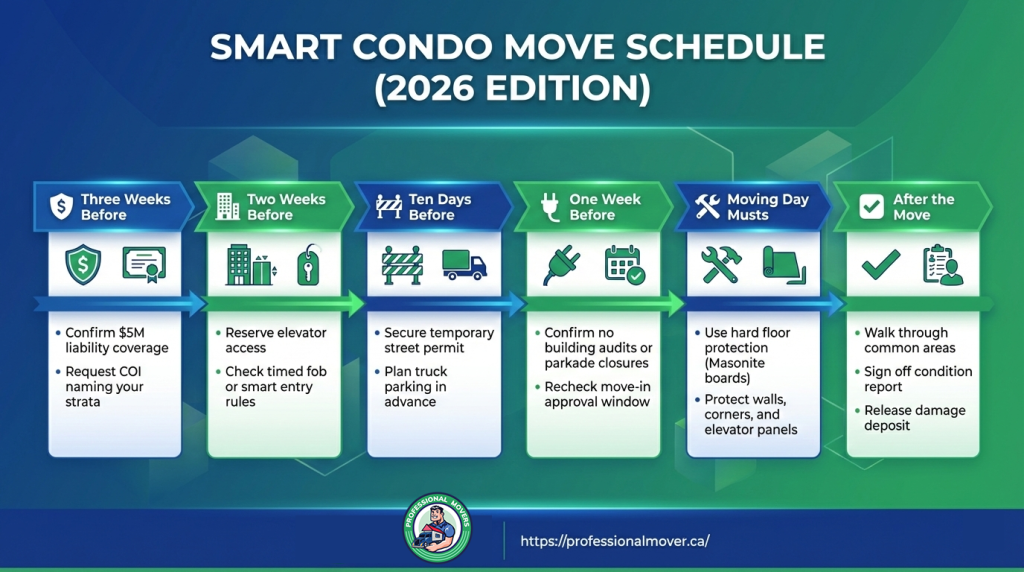
The 2026 Condo Moving Checklist
To ensure your move is seamless and fee-free, follow this final checklist:
Conclusion: Move Smarter in 2026
A successful Vancouver condo move in 2026 is all about staying ahead of the “paperwork curve.” Between updated PST rules affecting certain management or administrative fees and the strict Electrical Planning requirements, the rules of the game have changed.
By coordinating early with your concierge, securing your city permits well in advance, and ensuring your movers are fully insured, you can avoid the stress of “Move-Day Lockouts” and unnecessary fines. Planning ahead doesn’t just save you money; it ensures your first day, in your new home is exactly what it should be: a celebration.
Before you start dealing with strata damage deposits and freight elevators, make sure you have read our comprehensive Vancouver Moving Services Guide to understand the full scope of your relocation.
Important to Note: Strata corporations operate under the Strata Property Act. However, they also enforce their own registered bylaws. Therefore, you must get written confirmation from your building manager before moving day.

Testimonials

Love and Harsharan were Amazing. They showed up when they said, got right to work and didn't go over the time allotted. They were gentle with everything and very well mannered. 100% recommend. Thank you guys for making this move easy for us
- Marsha Widmeyer
Contact Us
"*" indicates required fields
Complete Moving and Storage Solutions Across Canada

Contact Our team
Call Professional Movers Canada or fill out our free moving quote form.

Get Your Quote & Plan
Receive an obligation-free estimate and a detailed plan of action for your move.

Experience a Smooth, Professional Move
Leave all the vexing tasks of relocation to our skilled Canada movers.