
Get Your Free Estimate Now
"*" indicates required fields






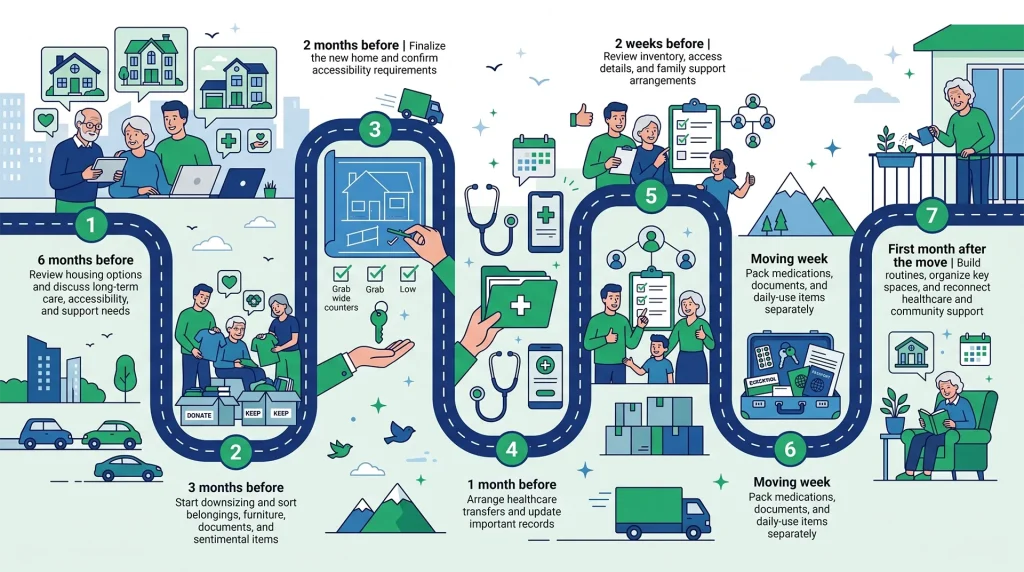
Moving aging parents to a new home in Canada is rarely just about real estate. The housing decision, family planning and preparation often begin months before moving day.
Stairs, icy driveways, home maintenance, distant medical appointments, or limited family support may start the conversation. But solving today’s problem is only one part of the decision.
The next home should also support future mobility needs, healthcare changes, caregiving responsibilities, and daily routines. Whether the plan involves a multi-generational household, downsizing, or assisted living, the goal is the same: create a safer, more practical living situation that can still work in the years ahead.
Written by Professional Movers Canada Editorial Team
Reviewed by Mr. Ajay Paul Singh
Director of Operations, Professional Movers Canada
Reviewed for practical moving considerations involving access planning, building rules, inventory preparation, priority-room setup and move-day coordination for aging-parent, condo, retirement-residence and family-supported moves in the regions Professional Movers Canada serves.
Note: This article provides general relocation-planning information. Families should confirm medical, accessibility, legal, housing and care decisions with qualified professionals.
Before Choosing a Home, Understand Why the Move Is Needed
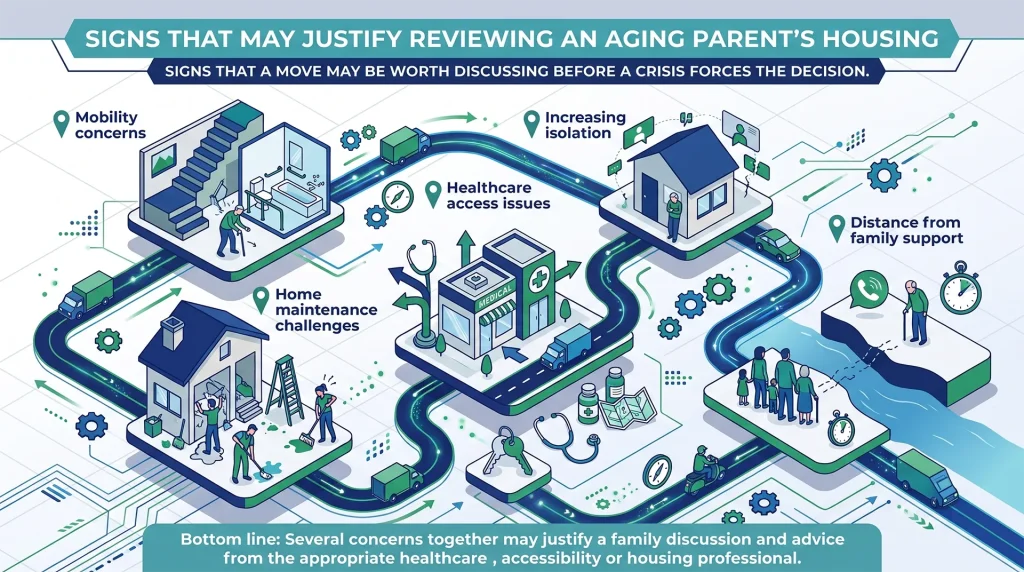
A sudden fall, health change, or safety concern may force the conversation quickly. More often, the signs build slowly. You may notice unread mail, missed property maintenance, fewer outings, or growing isolation.
Before asking where to move, ask what problem the move needs to solve. When property maintenance is the main concern, families may want to compare several options, including outside help, a lower-maintenance home or living closer to family.
The move should also preserve important routines, relationships and community connections. The clearer the reason for the move, the easier it becomes to choose the right housing option, budget, timeline, and level of support.
Assess the Next Five Years, Not Just the Next Five Months
A home can work well today and still become difficult later. Before choosing a property, think about how daily life may change over the next few years.
Stairs may become harder. Driving may become less reliable. Medical appointments may become more frequent. Family or caregiver support may need to increase.
Review the home against three practical questions:
Access: Can the entrance, hallways, bedroom, bathroom, and parking area still work if a walker or wheelchair is needed?
Healthcare and transportation: Consider whether medical appointments and daily transportation will remain manageable if driving becomes more difficult.
Support space: Is there room for a family member, caregiver, or overnight support if care needs change?
Planning around future mobility and care needs can help families avoid another rushed move later.
Is Downsizing the Right Housing Decision?
Downsizing is often treated as the obvious next step, but a smaller home does not automatically solve the real problem. Before choosing a condo, townhome, or smaller house, ask what the move needs to fix.
Maintenance: Is the current home too large, or has yard work, snow removal, cleaning, and repair work become too much?
Layout: Will the next home remove daily barriers, or will it still have stairs, tight bathrooms, poor parking, or difficult entryways?
Community: Will the move take the parent away from trusted neighbours, familiar stores, local doctors, or regular routines?
Alternatives: Could home modifications, outside help, or family support make the current home workable for longer?
If downsizing does not improve safety, access, and daily life, it may not be the right answer. In that case, families may need to reconsider the housing options compared later in this article.
Compare Living Options Before Moving an Aging Parent
The right housing choice depends on how much support a parent needs now and how much support may be needed later.
| Housing Option | May Work When | Watch For |
|---|---|---|
| Multigenerational Home | A parent needs regular family support, shared routines, or faster help in an emergency. | Privacy concerns, caregiver burnout, household costs, accessibility upgrades, and unclear responsibilities. |
| Independent Living Nearby | A parent is still active but wants to live closer to family, appointments, and daily services. | Winter isolation, transportation needs, social connection, and growing reliance on adult children. |
| Retirement Residence or Independent Senior Living | A parent wants less home maintenance, more structure, social opportunities, or easier access to meals and services. | Monthly costs, availability, included services, adjustment period, and emotional readiness. |
| Assisted or Supportive Living | A parent needs regular help with daily routines, personal support, or added care services. | Care level, eligibility, monthly costs, availability, and whether support can increase if needs change. |
| Long-Term Care, When Relevant | A parent needs a higher level of ongoing care than family support or supportive housing can provide. | Eligibility, waitlists, care needs, provincial or territorial rules, and family involvement. |
Housing terms, eligibility requirements and support levels vary by province or territory.
A multigenerational home can work well when expectations are clear before the move and there is enough space for support if care needs change. Independent living nearby may be better for a parent who wants autonomy but needs family closer for appointments, errands, and check-ins.
Families may need to reconsider the housing options compared above if the current home no longer supports safety, routine, or care needs.
Accessible Home Features That Matter Most
Accessibility should be checked before a health change makes the home difficult to use. When touring a property, walk through the space as if mobility has already changed.
Follow the route from parking to the entrance, then to the bedroom, bathroom, kitchen, laundry area, and main sitting space. In Canadian winters, the route from parking to the entrance can matter as much as the interior layout.
Focus on three areas:
Arrival
Look for parking close to the entrance, good exterior lighting, stable walkways, handrails where needed, and surfaces that are easier to manage in winter.
Entryway
At least one low-step or step-free entrance can make daily life easier, especially if a walker, cane, wheelchair, or caregiver support may be needed later.
Core living area
A main-floor bedroom, bathroom, laundry access, and clear paths between daily-use rooms can reduce reliance on stairs.
A walk-in or low-threshold shower, non-slip flooring, lever-style handles, and wider doorways can also support safer movement.
Door width also matters on moving day. Measure tight entrances, hallway turns and elevator openings before deciding whether beds, lift chairs, recliners or larger medical equipment should move with the parent.
A home does not need to look clinical to be accessible. Small design choices, such as safer flooring, better lighting, easier handles, and fewer tight turns, can help an aging parent move through the home with more independence.

Healthcare Access Should Influence Where You Move
The right home can still be the wrong choice if healthcare becomes harder to reach.
Before choosing a new community, look at how often your parents need medical care and how realistic those trips will be after the move.
Regular appointments, pharmacy visits, lab work, therapy, and follow-up care can quickly become part of the weekly routine.
Check access to:
- family doctors or primary care clinics
- specialists
- hospitals or urgent care
- pharmacies
- lab or diagnostic services
- rehabilitation or physiotherapy
- transportation for medical appointments
Instead of checking only the distance to a hospital, map the appointments your parents attend most often.
A nearby hospital may matter less than practical access to a family doctor, pharmacy, physiotherapist or recurring specialist appointment.
For moves between provinces, families should confirm health card rules, prescription coverage, physician access, and care-transfer steps through official provincial or territorial health sources before the move.
Distance is not the only issue. Winter driving, parking, transit routes, appointment timing, and who provides transportation can all affect daily life.
For parents with frequent or complex care needs, a property farther from medical services may place too much pressure on the parent and family caregivers.
In those cases, families may need to reconsider the housing options compared earlier.
How Moving Closer to Family Changes Caregiving Expectations
Moving closer to adult children can make support easier, but it does not automatically solve caregiving.
Before the move, families should discuss what help may become more regular:
- rides to medical appointments
- grocery trips and errands
- emergency support
- weekend check-ins
- small home tasks
- medication or pharmacy support
Early conversations are especially important when adult children have work schedules, young families, long commutes, or other responsibilities. Living nearby can reduce emergency travel time, but it can also create new expectations around daily availability.
Parents may want help without feeling watched. Adult children may want to support them without becoming the default answer for every task. Proximity works best when everyone understands what help is realistic, what support is occasional, and when outside care may be needed.
If the parent needs regular professional support, families may need to reconsider the housing options compared earlier.
Choose a Location That Supports Social Connection
A safer home can still feel wrong if it leaves a parent isolated.
Before choosing a new location, look at what daily connection will look like after the move. Are friends, family, community centres, walking areas, faith groups, recreation programs, or senior activities easy to reach? Families considering an Ontario move can compare healthcare, transportation and community factors in our guide to GTA locations for seniors. Families considering an Ontario move can compare healthcare, transportation and community factors in our guide to GTA locations for seniors. Those considering a quieter destination can also explore small Canadian towns for seniors.
Transportation matters here too. If a parent no longer drives, every outing should not depend entirely on an adult child.
Mover’s Note: In parent moves, families often focus first on bedrooms, bathrooms, and furniture placement. Those details matter, but weekly routine matters too. Nearby visits, familiar activities, and regular outings can help the new home feel easier to settle into.
A good location should support safety and independence, but also familiar routines, peer connection, and reasons to leave the house.
The Emotional Side of Moving Aging Parents
Leaving a long-time home can feel like losing more than space.
For an aging parent, the home may represent independence, familiar routines, family memories, neighbours, and control over daily life. What looks like resistance may be fear of losing that control.
Avoid making every conversation about what the parent can no longer do.
Instead of saying, “You can’t manage these stairs anymore,” try: “We want a home where daily life feels safer and easier without needing help for every small task.”
Better wording keeps the parent involved in the decision. It also helps the move feel less like something being forced on them. The same approach can help when families are comparing the housing options discussed earlier.
How to Sort Belongings Before an Aging-Parent Move
The physical move may take a day. Sorting decades of furniture, paperwork, family keepsakes, and sentimental items can take much longer.
Start with the new floor plan, not the boxes.
First, decide what must fit:
- Bed
- Favourite chair
- Dresser
- Daily-use items
- Medical or mobility equipment
Then sort the rest:
- what moves
- what goes to relatives
- what goes into storage
- what can be donated or sold
Aging-parent moves often need more time because the decisions are not only practical.
Familiar furniture may support the parent’s routine, mobility equipment may need dedicated space, and siblings may need to agree on family possessions.
Sentimental items need a separate timeline. Heirlooms, photo albums, collections, and personal keepsakes should not be left until the final week, especially when relatives need to be part of the decision.
Downsizing works better when space planning and sentimental sorting are handled separately. For a broader room-by-room sorting process, see our guide to downsizing before a move
Plan the First 48 Hours, Not Just the Moving Day
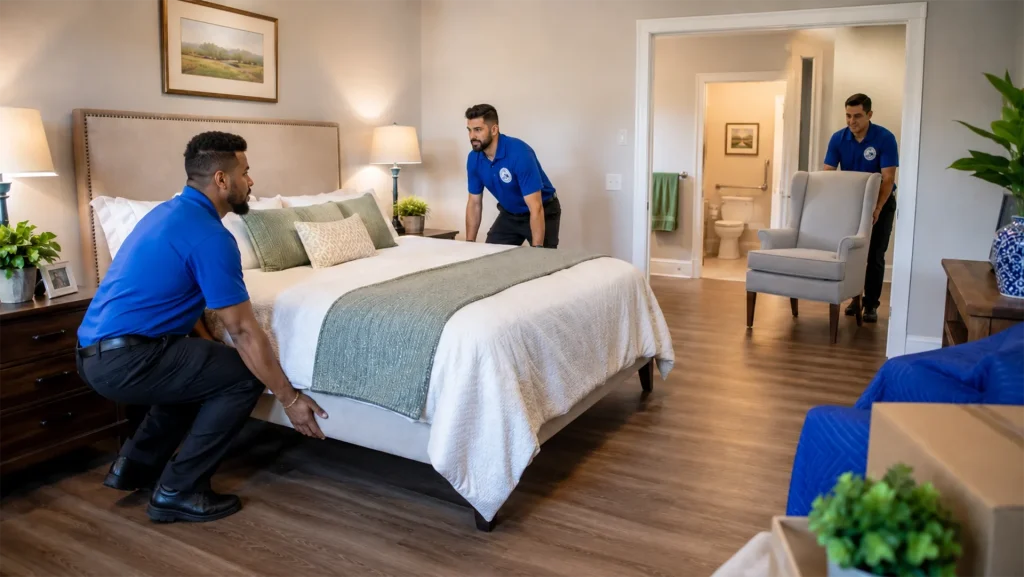
For aging-parent moves, the first priority is not unpacking every box. It is making sure the parent can sleep, eat, take medication, use the bathroom, and move around safely as soon as they arrive.
When possible, prepare the new home before moving day. Focus on the rooms and items that affect the first 48 hours.
Set up first:
- bedroom
- bathroom
- main sitting area
- medication area
- phone charger location
- mobility aids
- basic kitchen items
- clear walking paths
If the move involves a condo, apartment, retirement residence, or assisted living community, confirm the building’s move-in rules early.
Ask about move-in windows, service elevator bookings, loading areas, parking, hallway access, and any building time restrictions. Families that need help coordinating packing, building access and priority-room setup can also review our senior moving services.
From a moving-day perspective, the bedroom and main sitting area should be placed before less important boxes block the carrying route.
Keep essentials with the family, not in the truck. Medication, health cards, identification, medical records, glasses, hearing aids, chargers, toiletries, a change of clothes, mobility aids and comfort items should stay easy to reach.
A familiar chair, a safely positioned bed, a clear bathroom route and an accessible medication area can make the first night easier.
The rest of the unpacking can happen after the parent’s basic routine is protected.
Planning Note: Share mobility equipment, access rules and priority-room requirements when requesting the estimate.
Example from a planned aging-parent move: In a recent Toronto move, the parent relocated from a single-family home to a downtown Toronto condo. The family reviewed the condo floor plan before moving day and chose only the bedroom furniture, daily-use seating and essentials that would fit comfortably.
Professional Movers Canada coordinated the elevator timing, loading access and parking plan for the move. Medication, documents and personal essentials stayed with the family, while the parent’s sleeping area, bathroom route and main sitting area were prioritized on arrival.
Check Whether the Plan Works After Moving Day
Before confirming the move, picture a normal week in the new home.
Check whether your parents can move between the entrance, bedroom, bathroom and kitchen safely.
Confirm how appointments, errands, social activities and emergency support will work.
The plan should remain practical if mobility, transportation or care needs change.
Helping Aging Parents Move Starts With the Right Plan
Moving an aging parent works best when the family plans for daily life after the move, not just the moving date.
The right plan should make the next home safer to use, easier to manage, closer to the right support, and realistic for the family members involved.
Before booking the move, make sure the housing choice, downsizing plan, access details, healthcare needs, and first-week setup are clear.
Planning an aging-parent move? Share the addresses, inventory, accessibility needs and building requirements with Professional Movers Canada for a written estimate based on the move.

More Moving Articles
7 Secrets to Find The Best Toronto Mover
Testimonials

Love and Harsharan were Amazing. They showed up when they said, got right to work and didn't go over the time allotted. They were gentle with everything and very well mannered. 100% recommend. Thank you guys for making this move easy for us
- Marsha Widmeyer
Contact Us
"*" indicates required fields
Complete Moving and Storage Solutions Across Canada

Contact Our team
Call Professional Movers Canada or fill out our free moving quote form.

Get Your Quote & Plan
Receive an obligation-free estimate and a detailed plan of action for your move.

Experience a Smooth, Professional Move
Leave all the vexing tasks of relocation to our skilled Canada movers.