
Get Your Free Estimate Now
"*" indicates required fields






An office move can be delayed by an unbooked freight elevator, an unfinished floor plan, or internet service that isn’t ready when employees arrive.
Each delay affects when people can get back to work. An office relocation checklist gives Ontario businesses a month-by-month plan, from early lease and building checks to the first working day in the new office.
It shows what needs doing, who owns it and what should be confirmed before moving ahead.
Operationally reviewed by: Mr. Kamaldeep Singh
Operations Manager, GTA
Mr. Kamaldeep Singh has five years of experience managing GTA moving operations, including crew scheduling, customer communication and coordinating complex relocations in busy urban buildings.
Office Relocation Checklist and Timeline
Six months is a useful starting point for larger offices or spaces requiring building work.
Smaller businesses moving into ready-to-use offices may need less time. Adjust the dates to suit your lease, equipment and service requirements.
| When | What needs to happen | Lead |
|---|---|---|
| 6 months before | Review leases, budget, space and internet availability | Project lead, finance, IT |
| 5 months before | Confirm layout, furniture and building work | Facilities, department heads |
| 4 months before | Shortlist movers and check building access | Project lead, facilities |
| 3 months before | Book moving services, finalise floor plan and IT dates | Project lead, IT, facilities |
| 2 months before | Confirm team inventories and continuity arrangements | Department heads, IT |
| 1 month before | Brief staff, remove unwanted items and update contacts | Department heads, project lead |
| 2 weeks before | Confirm permissions, documents and delivery readiness | Facilities, IT |
| Moving week | Coordinate equipment shutdown, loading and delivery | Project lead, movers |
| First working day | Check essential systems and resolve critical issues | IT, department heads |
Who Should Be Responsible for an Office Move?
Appoint one project lead with authority to coordinate departments and resolve scheduling conflicts.
An office manager can fill the role, provided each team has a clearly assigned responsibility.
Finance: Budget, contracts and extra expenses.
IT: Backups, network access, equipment shutdown and reconnection.
Facilities: Property management, layouts, loading access and building readiness.
Department heads: Team inventory, staff instructions and workstation requirements.
Moving company: Packing, furniture preparation, transport and placement included in the contract.
Key insight: Computers can arrive at the right desks and still be unusable. Agree on who disconnects, labels and reconnects equipment before moving day so IT and the moving crew aren’t left waiting on each other.
Office Relocation Checklist: Completion Checks
The project lead should keep written approvals and outstanding tasks in one shared tracker. These are the checkpoints that matter most:
| Checkpoint | Deadline | Owner | Evidence of completion |
|---|---|---|---|
| Space and lease plan | 6 months before | Project lead | Occupancy dates, budget and requirements confirmed |
| Layout and building work | 5 months before | Facilities | Layout reviewed; required work assigned |
| Moving arrangements | 3 months before | Project lead | Moving company booked; written service scope, moving date and access requirements confirmed |
| IT service schedule | 3 months before | IT | Provider appointment confirmed, installation dependencies assigned and testing date recorded |
| Department readiness | 2 months before | Department heads | Inventories and work arrangements approved |
| Building permissions | 2 weeks before | Facilities | Elevator, loading and required documents approved |
| Unloading readiness | Before delivery | Facilities | Rooms clear; receiving contact assigned |
| Reopening | Before staff return | IT, project lead | Essential systems tested; critical issues assigned |
Six Months Before: Set Your Office Moving Plan
Start with the dates that cannot easily move: the current lease handover, the new office’s readiness and the time needed to complete any building work.
Review the Lease and Budget
Check notice periods, early termination provisions and restoration obligations. A new lease start date does not necessarily mean the space is ready for furniture delivery.
Allow for movers, IT services, furniture changes, overlapping rent and restoration of the old office. Track restoration separately from the new-office setup budget.
Check Furniture and Building Access
Measure large desks, cabinets and meeting tables against doors, corridors and elevators not just their proposed rooms.
A conference table may fit the meeting room but still require disassembly to get through the doorway.
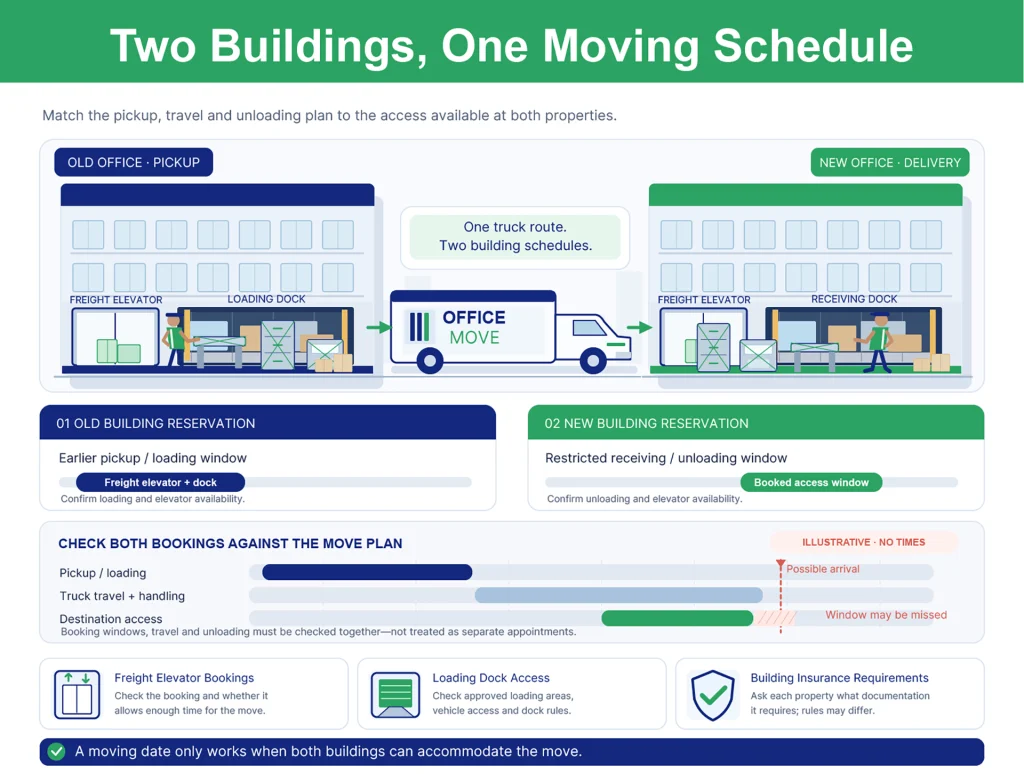
Ask both property managers about loading docks, freight elevator bookings, moving hours and insurance documents.
Request any Certificate of Insurance (COI) wording, including additional-insured requirements, and ask whether mover WSIB clearance is required.
Downtown Toronto towers may have narrow elevator windows and designated loading areas; see our downtown Toronto office moving guide for the local access considerations.
Key insight: A booked freight elevator doesn’t guarantee enough time to complete the move. Compare the available loading and unloading windows at both buildings against the volume of furniture and equipment being moved. A short access window at either location can determine the entire moving schedule.
Check Internet and IT Infrastructure Early
Ask IT to verify that the preferred provider can serve the new building, whether additional cabling is needed and what approvals installation crews require.
Check power and space for essential network equipment. Long installation lead times can affect the move date even when the office itself is ready.
Five Months Before: Confirm the Layout and Required Work
Review workstation capacity, shared equipment space and storage with department heads. Identify furniture to replace or reconfigure, together with required electrical work, network outlets or partitions.
Facilities should confirm landlord approvals and assign an owner and deadline to each outstanding job. Unfinished fit-out work can prevent movers from placing furniture where it belongs.
Four Months Before: Shortlist Movers and Check Scheduling Conflicts
Compare commercial movers against the inventory, furniture preparation and proposed dates. Ask about packing, assembly, after-hours service and experience with managed office buildings.
Share access and insurance requirements from both properties. Shortlist only providers able to meet them, then resolve conflicts between building access, renovation work and moving schedules before requesting final estimates.
Three Months Before: Book Services and Set the Delivery Plan
Arrange an On-Site Moving Estimate
Have shortlisted movers assess furniture, inventory, disassembly, loading distances and both buildings’ access. Compare the complete scope, including packing, reassembly, storage and after-hours charges not just the headline price.
Before signing, confirm the selected mover can supply required insurance documents and WSIB clearance where applicable.
Confirm IT Dates and Destination Labels
IT should now confirm installation, phone transfer and testing dates for internet, network and security systems.
Follow up on cabling work identified earlier; essential systems should be tested before employees return.
Finalise the floor plan and give each desk a destination code, for example, Level 3 – Sales – Desk 08.
Put matching codes on furniture, boxes and equipment, and share the plan with movers and department heads. A clear destination system reduces decisions during unloading.
Two Months Before: Confirm Team Needs and Continuity
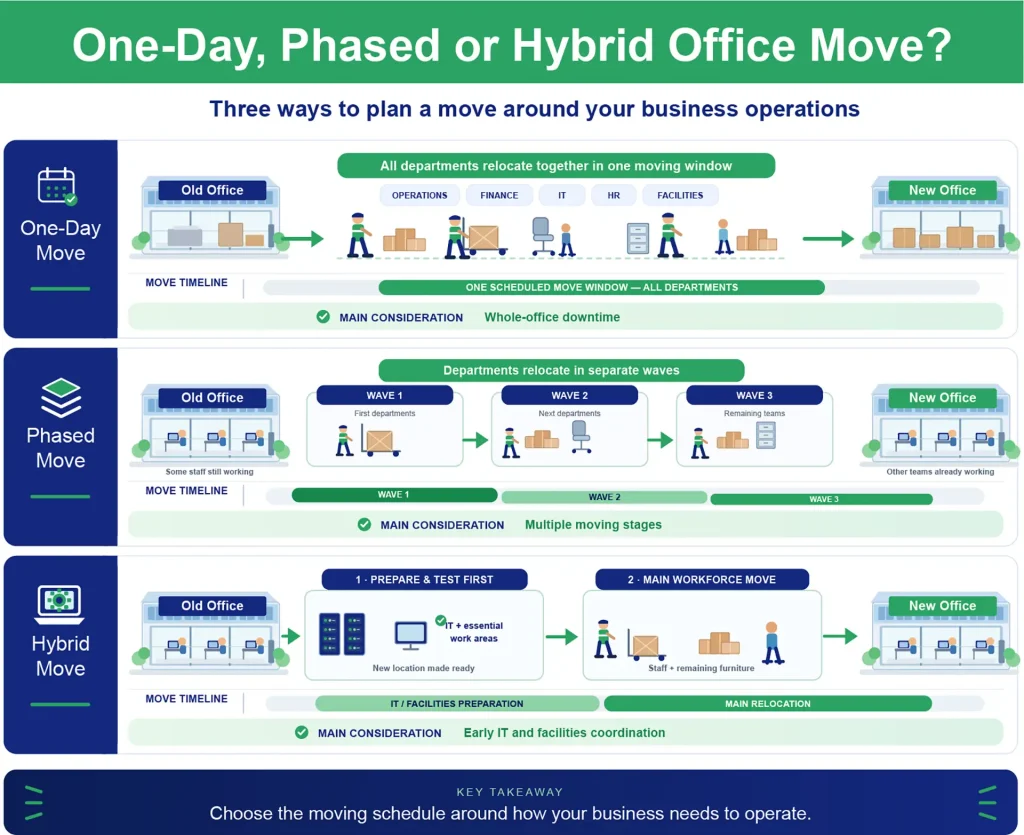
Department heads should confirm which workstations, shared equipment and files remain in use until the move, and which must be ready first at the destination.
For departments that cannot stop working, decide on temporary workspaces, remote access and return-to-office order.
IT should flag any outstanding service installation that could prevent people from working on day one.
One Month Before: Prepare Staff and Reduce the Inventory
Department heads should tell employees when to clear workstations, what to pack, whether remote work is planned and whom to contact about changes. The project lead handles conflicts affecting more than one team.
Remove What the New Office Doesn’t Need
Sort furniture, archived files and outdated equipment into move, dispose of or handle separately. Don’t pay to transport items the new office cannot use.
Check retention obligations before destroying financial or confidential records.
Have IT arrange secure erasure or destruction of data-bearing devices, retain destruction records where applicable and recycle equipment only after sensitive information is addressed.
Keep Customers and Deliveries on Track
Update customers, suppliers, invoices and delivery instructions with the new address. Redirect shipments scheduled during moving week.
IT should confirm phone-number transfers and arrange call forwarding or another contact number if needed.
Where possible, test the new internet connection before disconnecting the old one; businesses requiring continuous access may need both services running briefly.
Arrange Canada Post business Mail Forwarding around 30 days ahead, but notify senders directly; forwarding doesn’t cover parcels or tell correspondents your new address.
Two Weeks Before: Confirm Access and Delivery Readiness
Reconfirm Building Permissions
Facilities should obtain written elevator bookings, loading-dock permissions and approved moving hours from both buildings. Confirm that property managers have accepted the required COI, additional-insured wording and WSIB clearance where applicable.
Agree who protects elevators, floors and common areas. Give the moving lead parking instructions, loading entrances and security contacts. For Ontario winter moves, ask property management to clear snow and ice from loading routes.
Pack Non-Essentials and Inspect the New Office
Pack archived files and spare supplies; keep keys, access cards and essential records with designated staff. Walk through the new space to verify that destination rooms are accessible and installation work is complete.
Key insight: A clear loading dock doesn’t mean the office is ready for delivery. If destination rooms are blocked, movers may have to leave furniture in corridors or temporary holding areas, creating extra handling when those rooms become accessible.
Moving Week and Moving Day: Manage the Handover
IT should complete backups, document connections and shut down equipment only after its last required use. Set aside first-day supplies for each department.
Plan the Loading and Unloading Sequence
Agree on the unloading order before the truck is packed. Large cabinets and conference tables may need to enter rooms before desks and cartons block access; items needed first are often loaded last, depending on truck layout.
Keep an authorised contact at each address. The old-office contact checks what leaves; the new-office contact directs furniture placement and approves changes.
Before departure, check kitchens, meeting rooms, storage and cabinets against the inventory.
For confidential records, servers or other sensitive equipment, assign a staff member to document transfer and confirm receipt at the destination before signing off.
Real Commercial Move: Richmond Hill to Kitchener Office Relocation
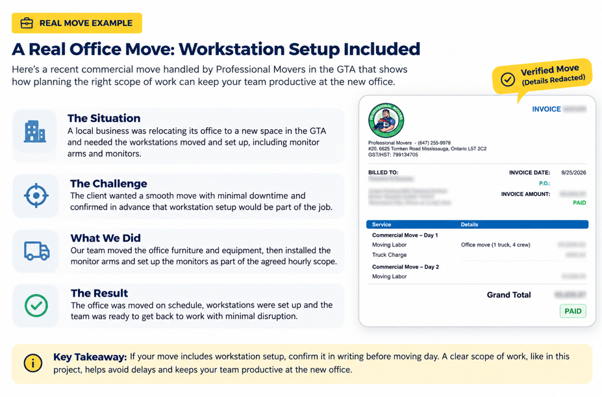
In September 2026, Professional Movers completed a commercial relocation from Richmond Hill to Kitchener, Ontario, with moving services recorded on September 25 and 28.
Before the move, the client asked whether the crew could also install monitor arms and set up monitors at the new office. Our sales team confirmed that workstation setup could be included in the hourly moving arrangement, with any additional time reflected in the final bill.
The final invoice documents the commercial moving services and confirms that the account was paid in full.
What this move shows: Confirm workstation setup before moving day. Agreeing on these tasks in writing helps avoid confusion about what’s included in the moving service.
The First Working Day: Get Your Office Ready for Business
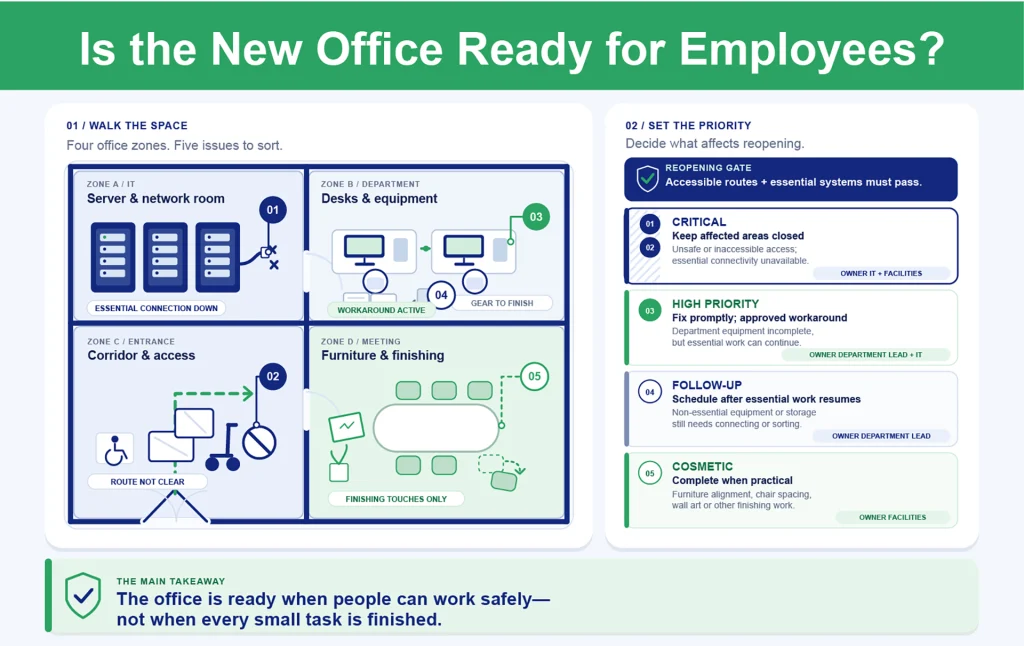
Before employees arrive, IT and facilities should test internet, phones, essential software, workstation connections and building access. Check walkways, accessible routes and meeting rooms too.
On the first working day, department heads should inspect their teams’ work areas and report problems to the project lead.
Track each issue, its owner and the next action. Fix obstacles to working before cosmetic adjustments.
Ontario Office Relocation: Business Address and Compliance Checklist
Check which obligations apply to the business’s legal structure and accounts; an operating-office move does not always change its registered office.
Commercial lease: Review notice, restoration and handover obligations. Ontario’s Commercial Tenancies Act operates alongside the lease terms; late vacant possession or unfinished restoration can create added costs.
Ontario business registration: If your relocation changes information registered with the Ontario Business Registry, update the applicable records within 15 days. The required filing depends on your business structure. For Ontario corporations moving their registered office to another municipality, check whether shareholder approval is required.
Federal corporation registration: If your business is federally incorporated and its registered office address changes, notify Corporations Canada within 15 days. This is separate from any applicable Ontario registration updates.
WSIB: Businesses with WSIB accounts should report changes to their address within 10 calendar days through WSIB account services.
CRA and provincial tax: Review physical, mailing and books-and-records addresses on applicable CRA business accounts. Businesses with provincial accounts, such as Employer Health Tax, should also check
Ontario Ministry of Finance / ONT-TAXS records. One agency’s update should not be assumed to update another’s.
Mail and deliveries: Canada Post recommends ordering Mail Forwarding about 30 days before the move. Parcels are excluded, so give couriers and suppliers the destination directly.
Workplace safety and accessibility: Keep loading areas clear, review accessible routes and employee accommodations, and update emergency procedures for the new layout.
When Should You Hire Professional Office Movers?
Involve commercial movers early when a relocation includes multiple departments, bulky furniture, specialised equipment or restricted building access.
For an assessment, prepare an approximate workstation count, furniture inventory, floor plans, moving dates, elevator windows and any specialised handling requirements.
A walkthrough helps establish crew needs, furniture preparation and the time required at both properties.
Share those details with Professional Movers Canada’s office moving team to discuss the scope and schedule.
Office Relocation Checklist: Frequently Asked Questions
Should Employees Pack Their Own Office Equipment?
Employees should pack personal belongings and assigned desk supplies. IT should handle computers, monitors and network equipment requiring disconnection or specialised preparation. Confirm packing responsibilities with your moving company.
What if the Freight Elevator Bookings at the Two Offices Don’t Line Up?
Confirm the loading and unloading windows with both property managers before finalising the moving schedule. Your mover may need to adjust the start time, loading sequence or delivery arrangements. Ask whether waiting time or an additional visit would affect the quote.
Can Employees Return to the New Office if the Internet Installation Is Delayed?
Only if there’s a workable alternative for the affected teams. IT should determine whether employees can work remotely, use a temporary connection or return in stages. Don’t schedule everyone to return simply because the furniture has arrived.

More Moving Articles
Testimonials

Love and Harsharan were Amazing. They showed up when they said, got right to work and didn't go over the time allotted. They were gentle with everything and very well mannered. 100% recommend. Thank you guys for making this move easy for us
- Marsha Widmeyer
Contact Us
"*" indicates required fields
Complete Moving and Storage Solutions Across Canada

Contact Our team
Call Professional Movers Canada or fill out our free moving quote form.

Get Your Quote & Plan
Receive an obligation-free estimate and a detailed plan of action for your move.

Experience a Smooth, Professional Move
Leave all the vexing tasks of relocation to our skilled Canada movers.