
Get Your Free Estimate Now
"*" indicates required fields






Moving out of a Vancouver apartment seems straightforward until you face strict strata rules, narrow hallways, and busy streets.
Many renters assume they can just park a truck and start loading, only to discover that moving hours are restricted, deposits are required, and buildings often demand proof of movers’ insurance in advance. Overlooking these details can turn a simple move into a costly, stressful day.
Hiring experienced apartment movers Vancouver can help prevent these headaches. They know how to navigate building protocols, handle elevator bookings, and coordinate with strata management.
Planning ahead is crucial: securing elevator access and arranging street parking early can save you fines and delays.
Stick around for step-by-step guidance designed to make your Vancouver apartment move smoothly and efficiently.
What You Must Know Before Moving Out of a Vancouver Apartment

Moving out of an apartment in Vancouver is more complex than in many other cities. The combination of dense neighbourhoods, limited loading zones, busy streets, and structured strata rules shapes how every move unfolds.
You must follow specific steps to avoid fines, delays, and complaints from neighbours or building management.
Strata bylaws vary from building to building, but most follow similar patterns. Residents typically face designated moving hours, strict elevator protocols, and mandatory deposits. Many buildings also require paperwork from your apartment movers Vancouver, before approving a booking.
Common mistakes Vancouver renters make include:
- Assuming the elevator will be available on move day.
- Forgetting to apply for a loading zone or parking permit.
- Booking movers last-minute during peak dates.
- Not measuring furniture or checking elevator sizes.
- Ignoring weather considerations, especially during winter rain cycles.
Use this quick readiness list before moving day:
- Confirm strata moving rules.
- Book the elevator.
- Apply for parking permits.
- Hire movers familiar with apartment moves.
- Measure hallways, doors, and elevators.
- Notify utility providers.
- Prepare for Vancouver traffic patterns.
Step 1 – Pre-Move Preparation for Vancouver Relocation (2–3 Weeks Before Moving)
Confirm Building and Strata Moving Rules Early
Every Vancouver apartment building has its own set of moving rules. These rules typically include fixed moving hours, commonly 9 am to 4 pm, Monday to Friday. Some buildings allow weekend moves, but many do not.
Elevator reservations are mandatory in almost all high-rise buildings. You must book the service elevator, not the regular passenger elevator, and provide a time window for your move. Most stratas request notice of at least two weeks.
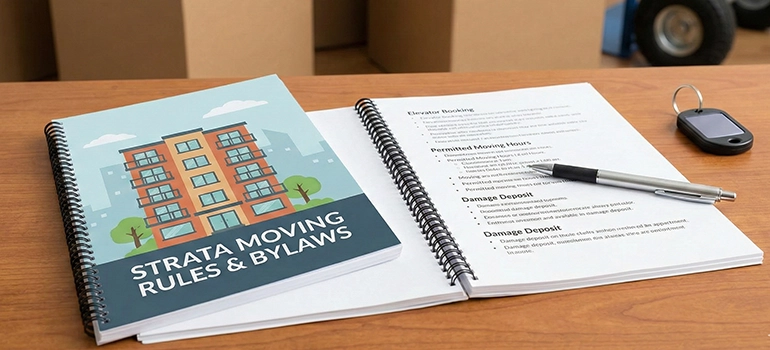
Expect to pay a refundable damage deposit, usually between $200 and $500. This deposit covers potential damage to hallways, flooring, or elevator panels.
Many buildings also require pre-approval of your apartment movers. Strata may request:
- Certificate of Insurance.
- Proof of liability coverage.
- Workers’ compensation documentation.
- Company details and mover names.
Contact your strata or concierge early to avoid delays.
Select Your Moving Date Strategically
Your chosen moving date can significantly affect cost and convenience. The best days to move in Vancouver are mid-week and mid-month. Movers often have more availability, and buildings are less congested.
Month-end moves are challenging because demand spikes and elevator booking slots fill quickly. Rental leases often end on the first of the month, creating heavy traffic for both renters and movers.
The weather should also guide your timing. Vancouver’s rainy seasons can slow down moves and increase the risk of wet floors and slippery surfaces. Consider earlier start times during the winter months so you finish before daylight fades.
Choose Professional Apartment Movers Vancouver
Selecting a moving company familiar with Vancouver buildings can save you time and prevent unnecessary stress. These movers understand how strata operate, know the city’s busiest streets, and handle elevator logistics with ease.
Use this checklist when hiring:
- Confirm they have apartment moving experience
- Ask for proof of insurance
- Request a transparent estimate
- Check recent customer reviews
- Ensure they can provide elevator padding if needed
Helpful questions to ask:
- Have you moved clients in my building before?
- What is your policy for delays caused by elevator access?
- Can you handle oversized items if the elevator is small?
- Do you offer packing or disassembly services?
Measure Everything Before Packing
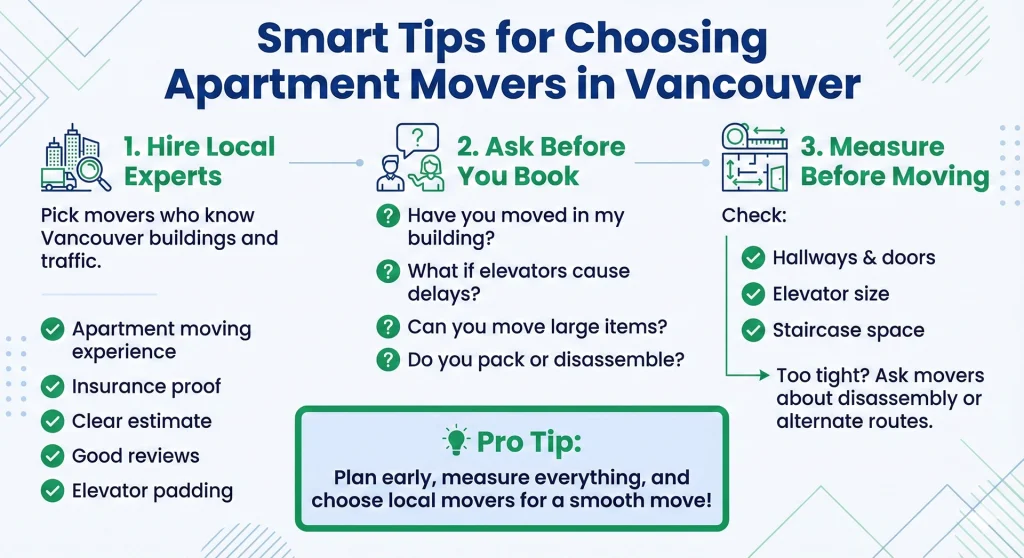
One of the most overlooked steps is measuring your furniture and access points. Elevators in older Vancouver high-rises are often narrow, with low ceilings. Hallways and staircases can also be tight.
Measure:
- Hallway width
- Door frames
- Elevator height, width, and depth
- Staircase turning radius
If you have oversized furniture, ask your apartment movers about disassembly or alternate access routes. Some items may need to be carried through parkade entrances or loading bays.
Step 2 – Vancouver Moving Permits and Parking Requirements
When You Need a City of Vancouver Parking Permit
Vancouver requires parking permits for moving trucks in many areas. You must apply for a permit if your truck occupies:
- Metered parking spaces
- A no-parking zone
- Any street space for an extended duration
The most common permit is the Temporary Street Occupancy Permit. You may also need meter reservations, which require installing meter hoods.
Apply at least seven to ten business days in advance. This timeframe ensures the city can process your permit, install signs, and prepare meter coverings if required.
Choose Your Parking Permit: Annual or Short-Term
How to Book a Temporary No-Parking Zone for Your Moving Truck
Vancouver’s no-parking zone permits are handled online through the City’s Engineering Services. During the application, you provide your moving date, street location, and truck dimensions.
After approval, the city installs temporary signs in your chosen spot. These signs indicate the reserved period for your move.
If another vehicle blocks your authorized space, you can contact the Vancouver Police Department’s non-emergency line or Bylaw Enforcement for assistance. Do not attempt to move the vehicle yourself.
Building-Level Permits and Fees
Strata buildings frequently add their own administrative charges. Expect:
- Non-refundable move-in/move-out administrative fees
- Refundable damage deposits
- Elevator protection charges
Your movers may need to submit documents such as insurance certificates, WCB clearance letters, and company details. Some buildings will not confirm your elevator booking until these documents are received.
Parking Challenges in High-Density Neighbourhoods
Parking difficulties vary by neighbourhood:
Downtown Vancouver
Expect heavy congestion and limited loading zones. Alley access may be available but requires coordination.
Yaletown
Streets are narrow, busy, and filled with restaurant patios during warmer months. Early morning moves work best.
Kitsilano
Many streets require residential parking permits. Check your building’s exact zone.
Mount Pleasant
Mixed-use areas create unpredictable parking patterns. Confirm your spot a day before moving.
Step 3 – Booking the Elevator Properly in Vancouver Apartments
Why Elevator Booking Is Critical in Vancouver High-Rises
Many Vancouver buildings enforce strict elevator booking rules. Failing to book the service elevator can lead to:
- Move cancellation.
- Loss of your damage deposit.
- Fines for using the elevator without authorization.
- Delays caused by other scheduled moves.
Strata takes elevator protection seriously because unprotected moves can cause damage that is costly to repair.
How to Book the Service Elevator Step-by-Step
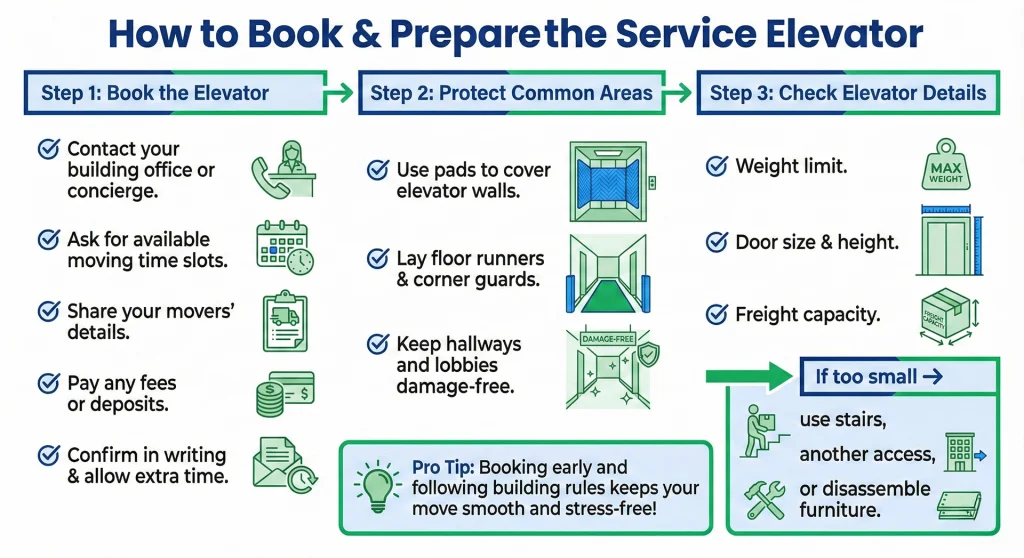
Follow this process immediately after choosing your move date:
- Contact the concierge or strata office.
- Request available moving windows.
- Provide your movers’ company details.
- Pay required fees or deposits.
- Ask for the protection requirements for your building.
- Confirm the booking in writing.
Provide yourself with buffer time. Moves rarely finish exactly when planned.
Protecting Elevators and Common Areas Properly
Most buildings require padding on elevator walls. This protects panels from scratches and dents. Some buildings supply their own pads, while others expect your movers to bring them.
Hallways, lobby floors, and door frames often require additional protection. Movers may lay down floor runners or foam corner guards.
Elevator Size and Restrictions: What You Must Check
Before moving day, ask about:
- Elevator weight limits
- Door opening size
- Ceiling height
- Freight capacity
If the elevator is too small, your movers may need:
- Stair access
- Alternate loading bay access
- Specialized disassembly services
Oversized furniture sometimes needs to be carried in through underground parkades.
Step 4 – Moving Day Execution Plan (What Actually Happens)
This step walks you through what actually unfolds on a moving day, from prepping your space before the crew arrives to managing the flow of the move and handling any surprises that come up.
Before Movers Arrive
Prepare your apartment and building access points. Clear hallways, secure loose items, and ensure a direct path from your unit to the elevator.
Confirm your parking permit is active. Check for posted signs or meter hoods at least 24 hours before your move.
Set aside fragile items in a designated area so movers know how to handle them.
When Movers Arrive at the Building
Movers usually check in with the concierge to access the service elevator key or lockout switch. This allows exclusive elevator control during your booked window.
Ensure your reserved parking spot is open. If a vehicle is blocking it, contact the relevant authority immediately.
Managing the Move Smoothly
Assign one person to supervise the movers and another to communicate with building staff. This division of roles keeps the move organized and avoids miscommunication.
Keep realistic expectations about timing. Heavy furniture, long hallways, and traffic delays can extend the move.
Avoid elevator bottlenecks by preparing items ahead of each elevator load.
Handling Unexpected Problems
Be prepared for common issues:
- Elevator breakdowns: Contact strata for immediate repair dispatch.
- Residents blocking hallways: Politely request clearance or ask building staff to intervene.
- Blocked parking space: Call Bylaw Enforcement for towing procedures.
- Weather challenges: Use tarps, blankets, or covered dollies to protect belongings.
Step 5 – Post-Move Tasks Most Renters Forget
Many renters forget what needs to be handled after the move, so here’s a clear guide to the tasks that matter once everything is unloaded.
Final Walkthrough and Damage Checks
Inspect your old unit and build common areas. Look for marks on walls, scratches on floors, or damage to elevator panels.
Take date-stamped photos. This documentation helps you secure your deposit return.
Notify strata promptly if everything looks good.
Returning Keys, Cards and Parking Remotes
Your landlord and strata may require different return processes. Some items must be handed to the concierge, while others go directly to property management.
Late returns may result in extra charges.
Address Changes and Utility Transfers
Update your address with:
- BC Hydro
- Internet provider
- Canada Post
- Strata management (Form K if applicable)
Failure to update can lead to missed bills or communication delays.
Settling Into Your New Vancouver Apartment
Unpack essential rooms first. Get familiar with your building’s recycling, composting, and waste rules, which are taken seriously in Vancouver.
Introduce yourself to neighbours, learn about building quiet hours, and locate bike rooms, mail areas, and storage lockers.
Costs You Should Expect When Moving Out of a Vancouver Apartment
Know the typical fees for building, city permits, and movers so you can budget accurately when moving out of a Vancouver apartment.
Building & Move-Out Fees
Strata buildings often charge move-out fees ($150–$250) and a damage deposit ($200–$500) to cover elevator use, padding, and common area wear. Monthly strata fees cover building maintenance and shared expenses, but unpaid fees may need to be settled before moving.
City / Permit Costs
Street parking, meter hoods, and temporary no-parking permits may apply, varying by location and duration.
Moving Company Costs
Movers usually charge hourly rates, with extra charges for heavy items, fragile handling, long carries, or peak-season moves. Itemized quotes are common for clarity.
Apartment movers Vancouver companies often provide itemized quotes for transparency.
Practical Pro Tips for a Smooth Vancouver Apartment Move
Simple steps and smart strategies to help your move in Vancouver go smoothly from start to finish.
Time-Saving Tips
- Pack room by room to stay organized and simplify unpacking.
- Label every box clearly so movers know exactly where each item goes.
- Disassemble furniture in advance to save time and prevent damage.
- Keep essentials in a separate bag for easy access on moving day.
Space and Traffic Tips
- Park early in the morning to secure loading zones and avoid fines.
- Avoid rush-hour traffic whenever possible to keep your move on schedule.
- Respect building rules for elevators and hallways to prevent delays.
Protection Tips
- Use floor runners to prevent scratches in hallways and elevators.
- Secure door frames and corners with foam guards to avoid damage.
- Wrap electronics and fragile items in padded blankets for safe transport.
FAQs – Real Questions Vancouver Renters Ask
Q: How do I move out of an apartment in Vancouver?
Moving out requires careful planning. Start by reviewing your building’s strata rules, book the service elevator, secure street parking permits if needed, and hire experienced apartment movers familiar with Vancouver high-rises. Early coordination prevents delays, fines, and damage, ensuring a smooth, organized, and efficient moving day.
Q: Do I need a parking permit for movers in Vancouver?
Yes, a permit is mandatory whenever a moving truck occupies metered or street parking spaces. Apply for a Temporary Street Occupancy Permit or meter reservation at least seven to ten business days in advance. This ensures legal parking, prevents fines, and allows smooth loading and unloading during your move.
Q: How far in advance should I book the elevator?
Most Vancouver strata require elevator reservations at least two weeks in advance. High-demand buildings may need more notice, especially during month-end or peak seasons. Confirm the service elevator, provide mover details, pay deposits, and check required padding. Early booking secures your preferred time and prevents conflicts with other residents’ moves.
Q: What is the best time to move in Vancouver?
The ideal moving days are mid-week and mid-month, avoiding weekends or lease-end peaks. Early morning start times minimize congestion, secure loading zones, and allow efficient elevator use. Weather considerations matter, especially during rainy months, so planning carefully ensures a safer, faster, and smoother move with minimal stress.
Q: What paperwork do movers need to provide to the strata?
Strata typically require proof of insurance, liability coverage, and Workers’ Compensation Board clearance. Some buildings also request company registration, mover names, and emergency contacts. Submitting complete documentation early confirms your elevator booking, prevents last-minute cancellations, and protects both the building and residents from potential property damage or liability issues.
Q: Can strata deny my movers?
Yes, strata can refuse access if movers lack proper insurance, liability coverage, or required documentation. Buildings prioritize safety and damage prevention, and without approved paperwork, elevator booking may be canceled. Using experienced, strata-approved movers ensures compliance, avoids fines, and guarantees your move proceeds on schedule without unnecessary delays.
Conclusion – Vancouver Apartment Moving Is Easy When You Follow the Right Steps
A structured plan makes your move manageable. Start by understanding your building rules, securing permits, and booking the elevator early. From there, focus on timing, parking, and coordination on moving day.
Experts like Professional Movers Vancouver, serving residents since 2018, can handle all the details, ensuring your move is smooth and timely. Use this guide and the quick-reference table below to stay organized and avoid costly mistakes.
When you prepare early and follow each step, your move becomes efficient, predictable, and far less stressful.

Testimonials

Love and Harsharan were Amazing. They showed up when they said, got right to work and didn't go over the time allotted. They were gentle with everything and very well mannered. 100% recommend. Thank you guys for making this move easy for us
- Marsha Widmeyer
Contact Us
"*" indicates required fields
Complete Moving and Storage Solutions Across Canada

Contact Our team
Call Professional Movers Canada or fill out our free moving quote form.

Get Your Quote & Plan
Receive an obligation-free estimate and a detailed plan of action for your move.

Experience a Smooth, Professional Move
Leave all the vexing tasks of relocation to our skilled Canada movers.